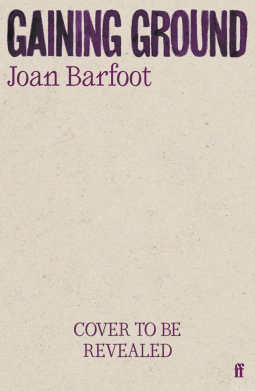
Gaining Ground
This title was previously available on NetGalley and is now archived.
Send NetGalley books directly to your Kindle or Kindle app
1
To read on a Kindle or Kindle app, please add kindle@netgalley.com as an approved email address to receive files in your Amazon account. Click here for step-by-step instructions.
2
Also find your Kindle email address within your Amazon account, and enter it here.
Pub Date Aug 25 2026 | Archive Date Aug 13 2026
Faber and Faber Ltd | Faber & Faber
Talking about this book? Use #GainingGround #NetGalley. More hashtag tips!
Description
Unearthed after half a century, this radical portrait of a woman who leaves her family to live alone in a woodland cabin will pierce the heart of anybody who has ever wanted to escape.
'It will stay with me for the rest of my days' Samantha Harvey
‘I didn't know how badly I needed it’ Amy Key
‘A joyful and generative novel’ Sarah Moss
‘Wildly original’ Sarah Hall
‘A modern masterpiece’ Doireann ní Ghríofa
I swear I loved them all, and I did the best I could. And then I left them, left all of it.
Abra is a wife and mother living a suburban dream—until one day, she walks away. In a woodland cabin, her new life alone begins. There are no mirrors, no clocks, no memories: just the squirrels breathing in the forest, and silence of vegetables growing. Years later, a young woman arrives, and the past-flashes begin. Daughter? A strange word. Is this her? And what will this mean?
Gaining Ground, published as Abra in North America, is a both a radical meditation on living on your own terms and an exquisite work of art. It calls to anybody who has ever wanted to escape—who has asked what it costs to be wild, to be sane, to be free.
Advance Praise
'A searing reminder of what we owe to ourselves' Saba Sams
'I absolutely loved Gaining Ground: so thought-provoking and complex, but also full of moments of beauty and peace. It veers deftly between the beauty of the seasons and the hollowing despair of a stifled existence. Abra’s dilemma electrified me. An extraordinary novel' Katherine May
‘I was gripped by this radical, deeply felt novel, finding myself increasingly immersed and moved by its fresh, insistent narrative of loss and becoming. I know this book will have a new life of being discussed, recommended and passed from friend to friend’ Megan Hunter
'A haunting book, with an outstanding sense of place and inner space: unsettling as well as memorable' Margaret Drabble
'If you want to pick a fight with yourself, pick this book. This is what the best writing does: makes you think, makes you think again, makes you think better' Claire Kilroy
'Beneath its glassy surface, the currents of this book are vast and dark and dangerous. Weeks after finishing it, I still feel caught in the vortex of its desperately sad – and sadly still relevant – oppositions; still hear the silent howl of its inarticulable pain. A profoundly important and timely reissue' Lucy Caldwell
Available Editions
| EDITION | Other Format |
| ISBN | 9780571399888 |
| PRICE | $17.95 (USD) |
| PAGES | 290 |
Available on NetGalley
Available to Buy
Buy on BN.com Buy on Bookshop.orgAverage rating from 62 members
Featured Reviews
 Book Trade Professional 1078236
A rare novel of ephemeral beauty - one that I am so glad Faber is republishing this year - about the crushing emptiness of loneliness, and how being alone can sometimes be the only salve.
Ever since GAINING GROUND was first published in 1978 - under the title of ABRA - readers have hotly debated the question at its core - of whether Abra's abandonment of her family to seek her own blazing truth is something to be decisively condemned, or respect as a powerful and courageous act of selfhood. But what really stands out to me, both in Barfoot's prose and in Abra's own dialogue, is the lack of a question at all.
The reader is left in no doubt as to the selfishness of her actions, the act of living totally for oneself. But what she is able to achieve for herself, in her own world away from the world, is something truly sacrosanct, regardless of external stimuli and context.
One passage that really stuck out to me was Katie's attempts to unpick what it is about her long-distant mother that makes her feel so calm, in comparison to all the other people in her life: "I don't trust them not to hate whatever it is I really am. That's weird, isn't it? I know so many people, and I guess I don't trust any of them. Why do you suppose that is? I wonder what I'm afraid of? . . . I wonder how come you're the one I trust?"
There is something about Abra's utter dedication to the inner self she has found, a state of being seemingly at utter odds with the rules of any society. Her utter isolation offers up something indescibrable and consoling for her daughter, even despite the rush of anger and pain of the past that comes with it.
Agreement or disagreement with Abra's decisions pale in comparison to what they can teach, about the importance of putting your wellbeing first, of living for yourself. I will never forget her. I will never forget this book.
 Steven R, Reviewer
I first read this book when I was in my teens and it has always stayed with me. It's been amazing to read it again and to find it still so alive. I love the details of living and surviving alone and the descriptions of the landscape around the cabin. In the Afterword, Joan Barfoot calls writing 'luxuriously solitary', which is how the narrator Abra's life alone struck me. The novel leaves open questions about Abra's sanity, her choices, whether she is heartless or simply finding a way, at last, that she can thrive. I couldn't help wondering (as one of Barfoot's older acquaintances did) what might become of Abra as she ages, yet the story also feels beautifully complete and satisfying.
 Julie F, Reviewer
Gaining Ground is the story of Abra, a woman who leaves her family, her home, her life, to live in an isolated cabin, to be at one with herself and nature. The sort of woman that I could see Ben Fogle visiting in his television programme “New Lives in the Wild”. It is sad, poignant and uplifting all at once, and reminds us that our life is also important and must be lived, and facing up to the consequences of our decisions. Thank you to NetGalley, the author and the publisher for a review copy.
Samantha C, Reviewer
Thanks to NetGalley and the publisher for this ARC.
I really enjoyed this book. It’s hard to do it justice really, but the premise is simple - burned out mother and wife who has dedicated her life to serving the needs of her husband and kids decides to leave and live by herself in a remote cabin and live off the land. Her daughter turns up, as an adult, and this is the start of her looking back and remembering her life and the process of deciding to take that step.
It is beautifully written and paced. It moves between her memories of her life before she made the move, with descriptions of her slow descent into a kind of stifling ennui, and her life in the woods with really evocative and precise descriptions of the nature around her.
It reminded me of some other (excellent) books I’ve really enjoyed that touch on similar themes or have a similar character study of a conflicted woman at their core. Books it brought to mind were A Woman in the Polar Night by Christiane Ritter, La Fugue by Aurélie Valognes, and The Yellow Wallpaper by Charlotte Perkins Gillman.
Highly recommend this forgotten novel, now thankfully found and being published very soon.
Judith E, Reviewer
The questions this book raises makes it an ideal choice for a bookclub. Written in 1978 it is as relevant and fresh today as it was then.
On the face of it, Abra appears to have an ideal life with an understanding husband, who is a good provider for herself and their two children. But all is not well with Abra who gradually finds herself descending into a well of despair and finally unable to keep up the pretence of normality succumbs to the urge to leave everything behind and try to find peace for herself living in an isolated cabin with some land and to go back to nature.
Remembering 1978 it became the trend back then for organic gardening, and self-sufficiency to a certain extent and wholefood eating, and this comes across in this story. I loved the description of Abra’s observances of the natural world around her and how she went about creating a home from the very basic cabin and nurturing the garden back to life to be productive.
I enjoyed this book and can’t think why I have never come across this author before and it certainly gives you food for thought. If you make the choice to have children do you have the right to just go off and leave them, with all the inevitable consequences; or does everyone deserve to lead a quiet peaceful life away from everything if that is what they crave? But there is a third element here in that Abra is clearly suffering from some sort of mental illness. It is a book provokes as much discussion now as it did when first published! I will look to read other books by this author.
Many thanks to Joan Barfoot, Faber and Faber, and NetGalley for the opportunity to read an early copy of this book.
Mia P, Reviewer
A reprint of a book initially published in the 1970s, but I think just as relevant today. I didn’t realise initially that it wasn’t a new release and, since there aren’t any significant markers stating what year the book is set in (save vague references to money), the story and themes do feel timeless.
A story about a woman who (suddenly and without notice) leaves behind her life and family to live alone in a cabin, the story is really about living selfishly and finding a sort of inner happiness. The book is very poetic and very readable.
Some of the best bits for me were when Abra is confronted by her ex husband and later her grown daughter. Even though she claimed she basically found her true self by leaving her old life behind, it seemed to me that at times she was more lost than ever (forgetting her name, feeling that her daughter wasn’t her daughter). I would’ve liked a bit more of a confrontation of her decisions, but I think part of the book is really seeing that sometimes a person’s decisions are just personal and irrational.
A really enjoyable read and a good length!
Librarian 2080346
Joan Barfoot’s Gaining Ground is a brilliant, sharp exploration of a fantasy many contemplate but few ever dare to execute: completely walking away from one’s life.
The novel centers on Abra, a woman who seemingly 'has it all': a supportive husband, two children, a comfortable suburban home, and a predictable social calendar. Yet, feeling herself slowly dissolving into the roles of wife and mother until nothing of her original self remains, she does the unthinkable. She packs a bag, buys a remote cabin in the Canadian wilderness, and simply leaves.
What makes Barfoot’s narrative so compelling is her refusal to cloak this act in romanticism. Abra’s departure isn't a whimsical quest for a bohemian lifestyle; it is a calculated, almost desperate act of survival.
Barfoot’s prose is wonderfully lean and rhythmic, mirroring the rigorous, repetitive tasks of Abra’s new life: hauling water, chopping wood, and preparing for harsh winters.
Gaining Ground stands as a monumental piece of feminist literature because it dares to ask uncomfortable questions about the cost of the nuclear family on a woman's soul. Barfoot explores the profound guilt, liberation, and societal taboo of a mother prioritising her own existence over her domestic duties. It is a book that challenges the reader at every turn, forcing us to weigh the value of security against the price of freedom.
Gaining Ground is an intellectually fierce novel. Joan Barfoot writes with an extraordinary psychological precision that gets entirely under your skin. It is an unforgettable read for anyone who has ever looked at their routine and wondered who they would be if they just kept driving past their driveway.
Elizabeth S, Reviewer
I found this a deeply thought-provoking novel.
We follow Abra, an upper middle-class wife and mother who, after growing increasingly detached from both her identity and her family, abandons the life she knows for an isolated existence in a cabin on a farm. In doing so she strips away the responsibilities and social expectations that defined her former life.
As readers, we’re confronted with an interesting tension: is Abra a symbol of freedom and self-determination, or a woman abandoning obligation with little regard for the damage her choices inflict on those around her?
This felt like the core question of the novel, explored through both Abra and her teenage daughter, Katie. (view spoiler)
This novel was originally published almost 50 years ago, yet it still feels remarkably contemporary in its exploration of womanhood, identity, duty, and autonomy.
Whether readers ultimately view Abra with admiration, frustration, or something in between, the novel is a fascinating deconstruction of the ways in which our roles and responsibilities in society form a sense of identity.
 Christine M, Media/Journalist
Joan Barfoot’s *Gaining Ground* is a remarkable, quietly radical novel about withdrawal, solitude and the slow reclamation of self.
Abra leaves behind the structures by which a woman’s life is usually measured — marriage, motherhood, clocks, mirrors, social expectation — and enters a different relationship with time, nature and herself. In the wilderness she learns how to grow food, live with silence, observe the natural world, and become present to her own interior life without the constant reflection of other people’s needs or judgements.
What might easily have become a simple story of escape becomes something much deeper: an inner journey into stillness, self-sufficiency and elemental being. Barfoot’s writing is at times glorious — precise, sensory, unsentimental and startlingly alive to the textures of weather, soil, hunger, memory and thought.
The afterword adds a powerful further layer, acknowledging the uncomfortable debate around Abra’s leaving and the charge of selfishness. Barfoot resists easy judgement. Her observation that, with or without Abra, her children would inevitably both suffer and thrive, though perhaps in different ways, gives the novel its moral seriousness. This is not a simple tale of escape or liberation, but a profound exploration of freedom, consequence, motherhood, solitude and the impossibility of living any life without cost.
Additionally, Barfoot’s afterword, with its reference to the “handmaiden” impulse and the partial recession of women’s freedoms, makes this republication feel urgently contemporary: Abra’s solitude is not an easy feminist fantasy, but a troubling inquiry into what freedom costs, what domestic identity conceals, and how quickly women’s autonomy can be questioned, romanticised, curtailed or erased.
First published decades ago, the novel feels astonishingly contemporary. In an age of noise, performance and relentless visibility, *Gaining Ground* offers a powerful meditation on what remains when a woman steps outside the mirrors held up by society and begins to live according to deeper, quieter rhythms.
This is a fierce, beautiful and unsettling book — one that asks what freedom costs, what solitude reveals, and what it means to become fully answerable to oneself.
Book Trade Professional 2088097
This is an incredibly visceral read.
It took me through every possible emotion, and I recognized in it the long-term desire of women to free themselves from the caretaker stereotype that –like every stereotype– takes too much for granted.
Regardless of gender issues, it is also captivating to read something that connects us so unavoidably to our wild nature, this idea that our modern world eases our prime instincts.
Corinna C, Reviewer
‘And then I left them, left all of it.’
First published in 1978, Gaining Ground follows Abra, a woman who marries young and becomes a mother and homemaker, before abandoning it all. She withdraws and lives in a cabin in the countryside, delighted with her solace until one day, Katie, her daughter, arrives.
This book tore me. On the one hand, Abra was empty and lost in motherhood and purposeless days - how joyous that she found her place in the woods. On the other, Abra became selfish and abandoned her marriage and children - how could anyone do such a heartless thing. The writing was beautiful and compulsive and I dislike Abra entirely.
Faber and Faber have made such an excellent choice in republishing this for a new audience on the 30th July this month. I am so pleased that this beautiful ponder of a novel isn’t lost to history.
So grateful for this copy, thank you!
 Katy W, Reviewer
This is such a radical book, particularly for the time it was published. It follows Abra, a woman who fell into marriage with a nice man and had two nice children and who has, for want of a better word, a good life by any standard. The problem is that somewhere along the way Abra, who had been largely sleepwalking into the existence allotted women like her, wakes up and finds herself bereft and empty of purpose and any sense of herself as an individual. Abra walks out on her life and children and makes a life for herself alone, living off the land and with minimal interaction with humans. When her now adult daughter appears to confront her, Abra looks back on her life and the decisions she made and reflects on whether she might have done things differently. At times it is difficult to like Abra but you cannot help admiring her. Barfoot doesn't wrap up the story neatly or answer all the many questions you as the reader might have, but she does offer a different viewpoint from which to see life. This book is as relevant now as it was then, which says a lot in itself about the situation women find themselves in.
Dorothy R, Reviewer
I really enjoyed reading about Abra's escape from the controls of family life. She was unhappy fulfilling the demands of a dutiful wife, but then she had the courage to make a new independent life for herself. She realised that conforming to the norm was not for her.
 Tess P, Reviewer
Astonishing. Rare that I feel so seen in a novel.
Woman walks out of her life, her marriage, her "normal world" to live as a hermit in the countryside. Years later her daughter visits to find out why.
I am so grateful that seemingly small, quiet novels like this are being written and re-published, showing that not everyone wants the same things in life. Loved it.
 Shari B, Reviewer
As I was reading this excellent and powerful book, I kept wondering why I'd never read any work by this author before. After reading it, I know I'll be reading more. I loved this book, which opens with a woman who is outside, hard at work and reminding herself that her name is Abra. She is so used to being alone that she's almost forgotten her name, even as she knows who she is. She sees a visitor coming up the lane towards her cabin and is dismayed. She doesn't know who this person is or what she wants, but soon learns that this is her daughter, Katie, now grown, who was 9 years old when her mother left. The interaction is tense, but Abra suggests that Katie book herself into a hotel in the nearby town and visit her from time to time. Katie agrees. These visits and their time together bring up memories for Abra and readers learn about her past life--how she ended up in what other people might see as an enviable life, only to walk away to create a life based on what felt right to her.
There is so much in this book and so much that I could relate to in my own life. I grew up in the kind of world Abra left behind and the author captures the shallowness and game-playing aspect of it so well. Even though Abra and her husband, Stephen, are successfully 'improving' their situation as the years go by, at least by societal standards, Abra feels less and less satisfied with and more and more distant from her own life. She doesn't feel successful at all, even as she rationalizes with herself about what she 'should' feel. She loses herself and feels like she's acting out a life. I've been there myself. It can be bewildering to understand that what people think is a good life is quite the opposite of that on a personal level. Abra doesn't set out a plan to leave her family, the whole thing unfolds quickly and unexpectedly. One day, she just knows where she is supposed to be. But the groundwork had been laid over several years as she came to understand that she was the outlier and she couldn't live her life in the situation she was in. Her husband wasn't going to give up his life and while some version of her could continue to exist in that world, she couldn't build a life there. Throughout the book, readers follow Abra's thought processes, her growing awareness, her epiphanies, and her evolution. I was gripped by this book from the start. I was rooting for Abra and felt some tension about how Katie's arrival would impact her hard won peace. For me, moving away from a situation in which I was acting out a life with my name on it didn't involve leaving my family, but it did involve leaving a world in which I'd invested most of my adult life to that point. It was extremely difficult and it took a long time to get back to myself. Joan Barfoot captures this perfectly. This edition also contains a fascinating afterword by the author in which she writes about the book and about the reactions to the book when it was first published. I cannot recommend this book highly enough.
 Janine H, Reviewer
Advanced Reader Copy received with thanks from Faber & Faber via NetGalley.
When I first read the premise of this novel, I immediately understood where the controversy would lie. Here is a married woman with a loving husband, children, comfort and security, who chooses to walk away from all of it.
It would be very easy to dismiss this book as an ode to selfishness.
I don’t think it is.
As I read, I kept thinking of other works exploring similar themes, particularly A Doll’s House by Henrik Ibsen and The Yellow Wallpaper by Charlotte Perkins Gilman. They are very different books, but all three examine what happens when women quietly unravel beneath the weight of expectation.
So often, women are taught that fulfilment follows a familiar path: find a good partner, have children, build a comfortable home and, if fortune smiles on you, perhaps you won’t even have to work outside of it. We are told that this should be enough. That we should feel grateful.
But what if it isn’t?
Abra isn’t portrayed as ungrateful. Nor is she cruel. Her husband clearly loves her and genuinely wants to help her discover what is missing. The tragedy is that she cannot identify it herself. She knows only that something feels fundamentally wrong.
When an unexpected opportunity presents itself, she takes it.
What fascinated me was not the decision itself, but the psychological exploration that follows. The novel continually asks whether living according to expectation is always the virtuous choice, or whether sometimes the braver act is admitting that the life everyone admires simply isn’t your own.
One thought continued to return as I read, though I appreciate this is entirely my own interpretation rather than something explicitly stated in the novel. I wondered whether Abra could be read through a modern neurodivergent lens. Her difficulty understanding her own emotions, her complete absorption in purposeful tasks, her preference for practical routine and the sense that she has always been performing a role that never quite fitted reminded me of experiences many autistic women describe today. Whether or not Joan Barfoot intended such a reading in 1978 is impossible to know, but I found it an intriguing way of understanding Abra’s internal world.
Eventually both her husband and, years later, her daughter find her. These encounters quietly explore another powerful question: when someone chooses to live differently, why is our first instinct so often to persuade them back into the life they left? Why do we assume happiness must look the same for everyone?
What I found most beautiful about Gaining Ground is that it refuses easy answers. It doesn’t ask us to agree with Abra. It asks us to consider her.
The prose itself is understated rather than lavishly descriptive, but the novel feels deeply literary because of its psychological insight. It is less interested in dramatic events than in the slow, often uncomfortable workings of a mind trying to understand itself.
This is one of those novels that lingers after you’ve finished it. It asks uncomfortable questions about purpose, identity, obligation and compassion. I suspect many readers will judge Abra before they attempt to understand her. I hope they resist that temptation because there is far more to discover beneath the surface.
As this was an advanced reader copy, I noticed a significant number of typographical errors, particularly in the first half of the novel. I have no doubt these will be corrected before publication and they didn’t affect my overall opinion of the book.
4/5
Quietly beautiful, thought-provoking and compassionate, Gaining Ground is a novel that I suspect will remain with me for quite some time.
Claire H, Reviewer
I have never read anything by Joan Barfoot before, but the blurb on this book was intriguing.
Immediately, I was pulled into this story and the landscape that was immaculately described. While there wasn't a drastic plot, the whole premise captured my heart and I could visualise and identify with the whole life of the main character as she became encapsulated into her natural surroundings.
A brilliant piece of writing and one that will definitely stay with me!
Thanks to NetGalley for the e-book in exchange for an honest review.
B B, Reviewer
Joan Barfoot’s ‘Gaining Ground’ is a beautiful, rich novel that reflects on identity, nature, and the responsibility one has to the self versus the responsibility one has to others. It is slow and meditative, with incredible depth—the kind of novel you can return to and always find something new, making it ideal for multiple rereads, as well as for discussions with friends or a book group.
I thoroughly enjoyed it and feel I gained a great deal from the experience, particularly through its exploration of the roles we play for others and the essential self that exists beneath them. It has been described by some as ‘life-changing,’ and for the right reader, I don't think that is hyperbole.
The only negative for me is that it is a little repetitive in places, and on occasion I found my attention waning. Those who prefer a plot-driven book or dislike long descriptions of nature will likely struggle to get into it. Ultimately, this is a deeply character-driven novel that paints a vivid, unforgettable portrait of one particular woman.
Overall, it was a wonderful reading experience that I know will stay with me. I definitely plan to get my hands on a physical copy so I can return to its pages again.
Many thanks to NetGalley, Joan Barfoot, and Faber & Faber for the ARC. My review will be posted on Instagram, Amazon UK, Waterstones, Goodreads and The StoryGraph near or on the publication date.
Catherine J, Reviewer
First published in 1978 (under the title Abra), this book’s reissue is timely - it is ripe for reappraisal. Its resurfacing allows it to ride the feminist wave several tides after the wave it first rode, if that makes sense! Abra’s decision to leave her children and go away to live on her own terms has parallels with more recent fiction - I’m thinking of Miranda July’s All Fours here -as well as, stretching back in time, far earlier fiction (Lolly Willowes - minus the children). Alternative modes of living are therefore revealed to be a long-time focus amongst feminist writers, and Barfoot does a sterling job here.
Flo N, Reviewer
Could this be the next Stoner, or is that just my wishful thinking? I believe this is a masterpiece. It is easy to say it should have its place on any must-read feminist novels list, but I think it has more in common with Walden, Into the Wild, or No Longer Human, because at heart this is a novel about isolation, and how freedom and liberation can sometimes mean the opportunity to choose to be lonely.
Ellen V, Librarian
Gaining Ground by Joan Barfoot is one of those rare books that quietly changes the way you see yourself and the world. I connected very deeply with its themes of independence, self-discovery, and finding the courage to live life on your own terms. The story stayed with me long after I turned the last page, and I know I'll carry its message with me for years to come. It's a deeply moving, thoughtful novel that deserves far more recognition than it gets. I will always hold this book close to my heart.
 Chris H, Bookseller
'Gaining Ground' is probably recognisable for most married women with a family of their own. It shows the complexity in a authentic and thought-provoking way: loving one's family very much, yet at the same time wanting sometimes to escape it all, the need to be free, to be one's own person again. It's beautifully, confronting, and I loved it!
Thak you Faber & Faber and Netgalley UK for the ARC.
 Hayley G, Reviewer
With my thanks to NetGalley and Faber and Faber Ltd for an early Kindle copy of Gaining Ground.
Although Gaining Ground was originally published in the 1970s, it feels timeless. Aside from a couple of references that date it, its themes are as relevant today as they were then. The parallels with the lives of women in similar societies remain evident and, in the case of mental health, perhaps even more so.
I don't know many women who haven't mentioned, joked about, or seriously considered leaving everything behind just to have space to breathe—to take time for themselves and do what they want, when they want. The truth is, very few do, and certainly not to the extremes that Abra does.
What the reader is left to decide is whether Abra is selfish or depressed, unhappy before and happy after, or simply bored at first and fulfilled later. We accompany her on her journey into a newly quiet world—that is, until her daughter finds her nine years after she left. Will Katie finally get the answers she has been searching for?
I think this would make an excellent book club read, not least because it raises so many questions and leaves plenty of room for discussion—although it may also give some people idea
tania b, Media/Journalist
This book, newly republished, tells the story of Abra, wife of a good and gentle man, mother to two well-adjusted young children, who ups and leaves her comfortable home and loving family to pursue the life of a virtual hermit in the backwoods north of Toronto. It deals with themes of loss of self, of selfishness and the struggle to be true to one's own nature, whatever that may be. Written in the first person, Abra herself is unflinching in her appraisal of her own actions, but refuses to return to a life in which she recognises she was only going through the motions of being a truly loving wife and mother. I found this a compulsive read, and highly recommend it, dealing as it does with themes that are very relevant to today's women who find themselves needing more than a secure home life and who wonder, "Is this it?".
 Alana B, Reviewer
Gaining Ground by Joan Barfoot
Originally published as Abra in 1978
This is a fascinating account of a woman abandoning her family and former life in order to find herself. Abra seems to have everything - an attentive husband, two children, and a nice home - but she has always felt strangely disconnected, as if she is playing a role. Fulfilling that role grows increasingly harder and harder, until she notices an ad for the sale of a small farm. Something shifts within her. When she visits, she feels like she is home, in a way she has never felt before. Leaving her family behind, she embarks on a new life, one that is isolated and independent but feels wholly right for the first time in her life.
Barfoot challenges our assumptions about what it means to exist. “I wanted to be able to catch glimpses of myself, just in passing, to reassure myself that I existed. That is what mirrors are for; and also,I have decided, what clocks do. Now I prove my existence by what I do.” Abra identifies that she lost herself, who she was, in the roles she assumed as wife and mother. There was no “I” in these roles only a flattening of her existence. On her own, she gardens for her food, chops her own firewood, and gradually discovers a truer way to be.
Barfoot beautifully describes Abra’s transition, in a style reminiscent of The Wall, Abra learns to be self sufficient and finds joy in the simple daily tasks and observations of the world around her. After 9 years of solitude her daughter finds her and her visit destabilizes everything Abra has built. Through this encounter, Barfoot raises provocative questions about competing ways of living, whether Abra’s choices are selfish and what duty really means when a person is trying to reclaim their own identity.
Reviewer 1170511
I cannot believe that this was written in the 1970s but am so glad that its being rereleased for a 2026 audience. There's still so much here that is relevant and meaningful.
Abra seems to have it all, but inside she is disconnected, depressed and drowning in the expectations placed on her by the world she lives in. She chooses to walk away - from her kids, her husband and her life - and live a solitary life in a cabin in the woods.
I found this book to be really confronting in the questions it asks about motherhood, expectations, how do we stay true to ourselves and what do we owe our families and the people who rely on us.
I imagine that this book will stay with me for a long time and I look forward to more people reading it and the discussions it will generate. Thank you for the early copy.
Liz C, Educator
I have had a dream of leaving everything, my husband, children, job and living like Abra for many years. I have planned it and dreamt it!
I would never do it but this book will stay with me and let me dream .
The changing seasons the cabin , the garden all idyllic.
Educator 557441
This was a deeply moving book, quite shocking in its core message. A woman who was seemingly managing her life quite well, gave up her job to Care for her children whilst her husband went to work, ….. lost herself entirely. As a result, she was unable to manage herself beyond the role of mother. She was able to cook for and collect the children, but while they were away from the home, she was not able to do anything except for lie in the bed.
Although this was deeply depressing in its own way, it was good to see that she was able to leave. Nobody was able to understand why, and even in some part of herself she was unable to understand it either, but she felt completely not herself while she was living in the marital home. This book explores the before and the after.
I would highly recommend this Book to everybody.
Debbie J, Reviewer
First published in 1978 I read. I loved this book…. It raised so many questions and provided the answers for one person that were right for her. Beautifully written, absorbing nature writing and wonderful characters. Thank you to the author. Thank you to #netgalley and the publisher for an ARC.
 Heidi M, Educator
I studied this book at University 25 years ago and it has stayed with me ever since. I’m so happy it’s being re-released and will give copies to all of my friends and family!
I recently read Jane Green’s ‘Rewilding’ which gave me similar feelings and raised similar questions.
Gaining Ground is brave, brilliant, beautiful and entirely addictive. I imagine every human being in the world has at least once thought about running away from it all…
Nature writing at its best.
Thank you to Netgalley, the publisher and the author for this ARC in exchange for a fair and honest review.
 Georgina C, Reviewer
I was absorbed by Abra's story, both of her previous life and how she spends her days at the cabin. I suspect a lot of women would identify with her experience leading up to the move, and fantasised about living in a cabin in the woods.
I loved the exploration of the push-and-pull between individual and societal needs, and the price paid to prioritise yourself over societal expectations and obligations.
But most of all, I found Gaining Ground difficult to put down and I always wanted to know what would happen next. A fantastic read.
Angela T, Reviewer
This novel was written nearly fifty years ago and was Joan Barfoot’s debut novel. Despite its age, many of the issues raised are still relevant today.
The main character, Abra, lives alone in an isolated cabin, which she paid for with money left by her grandmother. This money was not Abra’s to use, however, as it had been left in trust for her two children, Elliott and Katie. This is indicative of the course of Abra’s life.
Before seeking the solitary life, Abra appeared to have “the perfect life” – a loving husband, two children, a spacious home and a dog. However, she becomes increasingly disconnected and depressed. Was the answer to be found in solitude?
“Gaining Ground” documents Abra’s attempt to live her authentic life, without the constraints and expectations of society. Joan Barfoot’s novel challenges the notion that women must live up to expectations, denying their right to have a life which fulfils their needs. As well as being thought provoking, the author captures the beauty and wonder of the natural world.
This is a wonderful book: well written, thought provoking and beautiful! Thank you NetGalley for the opportunity to read and review it.
Lore S, Bookseller
This made me want to abandon my (nonexistent) children and move to the Canadian woodlands.
A hypnotic tale about the guilt-free pursuit of the life you want and a radical rejection of society. Recommended for anyone who liked I who have never known men or the wall. There may not be a dystopia here but it covered a lot of the same ground of what women do when released from society
 Joanna R, Educator
4.5 stars rounded up.
Really engaging and enormously thought-provoking.
'Gaining Ground' explores the push and pull between selfishness (perhaps?) and selflessness and particularly what it means for women in our society with all its relentless expectations on women.
I could absolutely empathise with Abra, as I often feel the need to escape the Sisyphian role of motherhood and running a house and planning that week's dinners. The difference I suppose is I am happy enough (and lucky enough) to book into a spa for the day and then I am able to return back to life and its demands...
'It calls to anybody who has ever wanted to escape - who has asked what it costs to be wild, to be sane, to be free.'
Thank you to NetGalley for providing me with an ARC.
Readers who liked this book also liked:

Premee Mohamed; Jonathan Sims; Rusty Quill
General Fiction (Adult), Horror
Dr. Anne Aspler
Biographies & Memoirs, Health, Mind & Body, Parenting, Families, Relationships