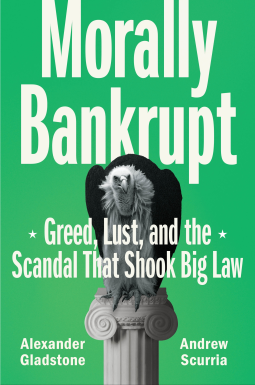
Morally Bankrupt
Greed, Lust, and the Scandal That Shook Big Law
Sign In or Register Now to see if this title is available for request.
Buy on BN.com Buy on Bookshop.orgSend NetGalley books directly to your Kindle or Kindle app
1
To read on a Kindle or Kindle app, please add kindle@netgalley.com as an approved email address to receive files in your Amazon account. Click here for step-by-step instructions.
2
Also find your Kindle email address within your Amazon account, and enter it here.
Pub Date Apr 20 2027 | Archive Date May 21 2027
Henry Holt & Company | Henry Holt and Co.
Description
An explosive investigation into a scandal at a federal courthouse in Texas, revealing how the nation’s corporate bankruptcy system was compromised at the expense of everyday Americans—told by the Wall Street Journal reporters who broke the story.
Most Americans think of bankruptcy as a demise to be avoided at all costs, but major cases can be a golden opportunity for high-powered lawyers and their clients on Wall Street. Steering a distressed company there can allow a firm to engineer big paydays for corporate executives and financiers in deals that often leave their adversaries with pennies on the dollar.
Over the past decade, white-shoe law firms flocked to the Houston court of Judge David R. Jones, the nation’s most powerful and influential bankruptcy judge, where he and his colleagues presided over the restructuring of major American businesses including JCPenney, Neiman Marcus, Chesapeake Energy, Men’s Wearhouse, Chuck E. Cheese, and Regal Cinemas. Judge Jones quickly became known for ruling in favor of the corporate debtors those lawyers represented and the well-positioned private equity firms and hedge funds they struck deals with. Those with elite representation seemed to have the inside track—they kept getting what they wanted while smaller investors, unpaid vendors, and retirees were often told that the pie just wasn’t big enough for them to get the piece they were owed.
One of those outsiders to Jones’s court discovered that the judge, who often preached about the “integrity of the process,” was harboring a personal secret that threatened to undermine faith in the federal judiciary. He teamed up with a crew of other people who felt they were wronged, making a stand against the Houston machine that would pit them against some of the world’s most powerful law firms and a justice system that had become twisted to benefit the connected few, with ramifications for all Americans.
Available Editions
| EDITION | Other Format |
| ISBN | 9781250443960 |
| PRICE | $29.99 (USD) |
| PAGES | 336 |
Available on NetGalley
Available to Buy
Buy on BN.com Buy on Bookshop.orgBISAC Codes
Average rating from 3 members
Readers who liked this book also liked:



Tim Leatherman; Chris Kornelis
Biographies & Memoirs, Business, Leadership, Finance







Igor Fostenko
Biographies & Memoirs, Business, Leadership, Finance, Christian

Nancy B. Ronquillo
Biographies & Memoirs, Health, Mind & Body, Parenting, Families, Relationships


Wendy Lower; Jonathan Petropoulos
Biographies & Memoirs, History, Nonfiction (Adult)

Luiz Schwarcz
Business, Leadership, Finance, Essays & Collections, Nonfiction (Adult)