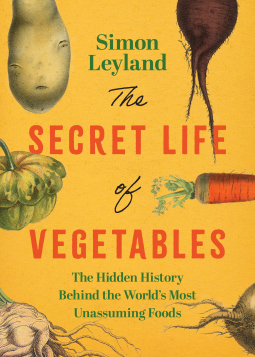
The Secret Life of Vegetables
The Hidden History Behind the World's Most Unassuming Foods
Sign In or Register Now to see if this title is available for request.
Buy on BN.com Buy on Bookshop.orgSend NetGalley books directly to your Kindle or Kindle app
1
To read on a Kindle or Kindle app, please add kindle@netgalley.com as an approved email address to receive files in your Amazon account. Click here for step-by-step instructions.
2
Also find your Kindle email address within your Amazon account, and enter it here.
Pub Date Apr 6 2027 | Archive Date Jan 18 2027
Globe Pequot | Prometheus
Talking about this book? Use #TheSecretLifeofVegetables #NetGalley. More hashtag tips!
Description
We think we know our vegetables. We chop them, roast them, forget them in the crisper drawer. But beneath their humble surfaces lies a world far stranger, funnier, and more consequential than anyone imagines. In The Secret Life of Vegetables, Leyland uncovers the wildly unexpected histories of the plants that populate our gardens and dinner plates—transforming carrots, cabbages, pumpkins, and potatoes into unforgettable protagonists in the human story.
With wit, scholarship, and a talent for irresistible digressions, Leyland reveals how:
- The potato sparked revolutions, saved nations from famine, and changed the fate of Europe.
- The carrot was engineered, yes, engineered, into its iconic orange form, and later weaponized as wartime propaganda.
- The onion became a symbol of eternity, a medicinal cure-all, and a mythic ingredient revered across continents.
- The cabbage inspired philosophers, disgusted revolutionaries, anchored peasant diets, and quietly steered the course of Western cuisine.
- Horseradish and wasabi became botanical cousins of chaos, fueling ritual, punishment, and culinary bravado.
- The melon, long associated with decadence, fashion, and aristocratic obsession, blurred the line between fruit, vegetable, and cultural fixation.
Moving from ancient Rome to medieval monasteries, from Victorian dining rooms to modern kitchens and scientific labs, Leyland shows how vegetables have shaped literature, medicine, superstition, empire, and everyday life. In his hands, the cabbage becomes a philosopher; the beet, a romantic; the pumpkin, a seasonal celebrity; the turnip, a folkloric trickster; and fennel, leek, cucumber, and rhubarb emerge as historical characters overflowing with secrets.
Funny, urbane, and deeply informed, this is food writing at its most original, not about recipes or chefs, but about the tangled human histories rooted in the vegetables themselves. Leyland celebrates curiosity and digression while grounding each chapter in rigorous research, botanical insight, and cultural imagination.
Whether recounting Pliny the Elder’s cabbage cures, Lewis Carroll’s culinary nonsense, Diogenes’ vegetable-based philosophy, or the biochemical sorcery of fermentation, The Secret Life of Vegetables transforms the vegetable patch into a grand stage where folklore, science, appetite, and absurdity collide.
(Includes 24 B&W Photographs)
Advance Praise
“The Secret Life of Vegetables is a satisfying succotash of history, wit, and outlandish vegetal lore. I recommend three servings a day.”
—Mary Roach, New York Times bestselling author of Stiff and Packing for Mars
Marketing Plan
Positioning Statement
A lively, erudite, and delightfully digressive tour through the secret lives of vegetables—revealing how humble plants have shaped our culture, cuisine, superstitions, language, politics, and even love. In the tradition of Mark Kurlansky's two books Cod and Salt and Bee Wilson's Consider the Fork, Simon Leyland—Oxford classicist, former soldier, ex-City trader, and BBC regular—transforms the vegetable patch into a grand stage where folklore, science, appetite, and absurdity collide. With wit and rigorous scholarship, The Secret Life of Vegetables offers the most original food writing in years: not about recipes or chefs, but about the tangled human histories rooted in the plants themselves.
Market
Market Opportunity & Audience
Food writing is a $1B+ category with sustained consumer demand: Books on culinary history consistently outperform food memoir and recipe books in backlist sales; titles like Salt (Kurlansky) have sold 500,000+ copies and remained in print for 25 years
The “secret history” narrative-nonfiction boom: Rhiannon Jones's The Secret Lives of Colour sold 300,000+ copies in the U.K. alone; Kurlansky's two titles Cod and Salt collectively passed 1 million copies—confirming deep appetite for surprising object-history books
Gardening culture at all-time highs: The RHS reports that over 18 million people in the U.K. now garden; the U.S. National Gardening Association estimates 55% of American households participated in food gardening post-pandemic—a captive audience hungry for deeper engagement with their plants
Cross-generational food curiosity: Nielsen BookScan data shows food/drink cultural history titles sell strongly across the 25–65 demographic, with particular growth among 30–45 readers seeking intellectually engaging nonfiction
BBC and U.K. media moment: Food history programming (e.g., Food: A Cultural History) draws consistent audiences of 2M+ on BBC Two; author Simon Leyland's existing BBC presence provides direct activation pathway
Plant-based eating revolution: Global plant-based food market valued at $29.4 billion (2020) and projected to reach $162 billion by 2030 (Bloomberg Intelligence); consumers seeking cultural and historical context for the foods they're increasingly choosing
Perfect for fans of Michael Pollan, Mark Kurlansky, Bee Wilson, and The Secret Lives of Colour—books that blend history, science, culture, and wit into irresistible narrative nonfiction
Strong gift book potential: Witty, erudite illustrated hardcovers in this category regularly appear on bestseller lists November–December; ideal for gardeners, cooks, history lovers, and general curiosity readers
Ideal for serialization and excerpt placement: Each chapter is self-contained—the carrot, the potato, the onion—making individual pieces perfectly sized for magazine serialization, newsletter features, and podcast deep-dives
Author Credentials
Oxford classicist with genuine academic authority: Leyland's classical training gives him credibility to draw on Pliny, Diogenes, and Roman sources that other food writers cannot access; his erudition is foundational to the book's unique voice
Extensive BBC broadcast experience: Multiple appearances across BBC radio and television discussing food, cultural history, and literature—established media presence with proven broadcast appeal and familiarity to producers
Supported by leading U.K. PR company: Active relationship with a major PR firm ensuring coordinated campaigns across print, online, and broadcast; wide media placement reach in both literary and lifestyle markets
Translator and linguist: Leyland's expertise in language and translation enriches the book's treatment of how vegetables have shaped word meanings across cultures—a distinctive scholarly angle unavailable to most food writers
Published author with track record: Multiple books exploring European eccentricities, linguistic curiosities, and cultural oddities—an established readership and publisher relationship
Former soldier and ex-City trader: An unusually rich life story that makes for compelling interview material—the author's biography itself is a media hook, positioning him as anything but a typical food writer
Urbane, witty media personality: Known for mischievous charm and lightly worn erudition—a natural fit for both highbrow literary radio (Radio 4, BBC World Service) and mainstream broadcast
Lives in the U.K., cultivating both garden and curiosity—ideal for seasonal media tie-ins around planting and harvest cycles
Publicity
Print, Broadcast & Major Media
Major trade reviewers: Publishers Weekly, Kirkus Reviews, Library Journal, and Booklist among others
UK national press: The Guardian (Food & Drink, Saturday Magazine, Review), The Times (Saturday Review), Sunday Times, Daily Telegraph, The Observer, The Spectator, The Literary Review
US national press: The New York Times (Arts & Ideas, Sunday Book Review), The Washington Post (Food section), The Wall Street Journal (Weekend), The Atlantic, The New Yorker
Food & lifestyle: Bon Appétit, Food52, Saveur, BBC Good Food Magazine, Waitrose Food, Delicious Magazine, Olive Magazine, Great British Food
Gardens & nature: Gardens Illustrated, The Garden (RHS), Gardeners' World Magazine, Country Life, BBC Gardeners' World Magazine
Literary & cultural: Times Literary Supplement, London Review of Books, New Statesman, Literary Review, The Critic, Prospect Magazine, Intelligent Life
History & popular culture: Smithsonian Magazine, History Today, BBC History Magazine, Lapham's Quarterly, American Scholar
Science & nature: New Scientist, BBC Science Focus, Natural History Magazine, Scientific American
BBC Radio: Radio 4 (Today programme, Saturday Live, Woman's Hour, Food Programme, In Our Time, Desert Island Discs consideration), Radio 4 Extra, BBC World Service (Books & Authors)
BBC Television: BBC Two food and culture documentaries, BBC Breakfast, Sunday Morning Live (gardening/food segments)
ITV / Channel 4: This Morning (food history segments), Sunday Brunch, Channel 4 Food
US broadcast: NPR (Fresh Air, Weekend Edition, All Things Considered, The Splendid Table), PBS (America's Test Kitchen), CBS Sunday Morning
Op-ed and serialization strategy: Pitch individual vegetable chapters as standalone magazine features; negotiate UK and US first serial rights for Guardian Weekend, NYT Magazine, The Atlantic
Podcasts
Food, History & Culture: The Food Programme (BBC Radio 4), Gastropod, Spilled Milk, The Splendid Table, A Taste of the Past (Heritage Radio Network), Eat Your Words, The Kitchen Sisters
Books, Ideas & Narrative Nonfiction: You're Wrong About, Revisionist History (Malcolm Gladwell), Cautionary Tales (Tim Harford), Stuff You Missed in History Class, Throughline (NPR), American History Tellers, The Ezra Klein Show, Intelligence Squared, The Verb (BBC Radio 3)
Science & Nature: Science Weekly (The Guardian), Radiolab, Hidden Brain, In Our Time (BBC Radio 4), The Infinite Monkey Cage, Ologies with Alie Ward
Gardening & Plants: Gardeners' Question Time (BBC Radio 4), On the Ledge (plant podcast), The RHS Podcast, Roots to Shoots, A Way to Garden (Margaret Roach)
Wit, Culture & Curiosity: No Such Thing as a Fish (QI researchers), Answer Me This, Lexicon Valley, Allusionist, Cautionary Tales, Something Rhymes with Purple (Susie Dent)
Social Media & Digital Marketing
Author Platform & Built-in Demand
BBC media presence: Leyland's existing BBC appearances provide ongoing content for social amplification; clips, audio excerpts, and interview segments to be repurposed across digital channels pre- and post-publication
U.K. PR company partnership: Coordinated social campaign across publisher, author, and PR firm channels; synchronized content drops, media alert amplification, and influencer seeding
Publisher social channels: Targeted posts across Instagram, X (Twitter), Facebook, and TikTok—chapter-by-chapter 'Did You Know?' content series; shareable vegetable facts and historical anecdotes formatted as social cards
#FoodHistory and #CulinaryHistory communities: Active, engaged audiences on Instagram (1.2M+ posts tagged #foodhistory) and TikTok (#foodhistory 500M+ views); organic placement potential through shareable content
BookTok strategy: Target BookTok creators specializing in nonfiction, food writing, and “weird facts” content—the book's chapter structure (one vegetable per chapter, one astonishing fact per page) is inherently TikTok-friendly; target 20–30 UK and US nonfiction BookTok accounts with 50K–500K followers each
Bookstagram outreach: Seeding to U.K. and U.S. food/book crossover Instagram accounts; the book's visual appeal (gardens, markets, historical illustrations) is Bookstagram-native content
Gardening influencer outreach: Partner with top U K gardening influencers (Monty Don's social presence, @gardenersworld, @rhs — combined 2M+ followers) and U.S. equivalents for organic endorsement from gardening community
Substack and newsletter outreach: Pitch to popular food-writing Substack newsletters (e.g., Vittles, Feast, Whetstone) for excerpt placement and author Q&As; these newsletters routinely reach 50,000–200,000 highly targeted food-interested readers
Seasonal social content calendar: Built around vegetable growing seasons—carrot chapter content in spring, pumpkin in autumn, cabbage in winter—ensuring year-round relevance and recurring social moments well beyond initial publication window
Available Editions
| EDITION | Hardcover |
| ISBN | 9781493099443 |
| PRICE | $28.95 (USD) |
| PAGES | 320 |