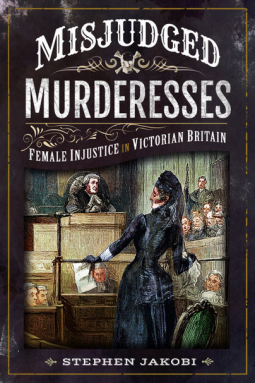
Misjudged Murderesses
Female Injustice in Victorian Britain
This title was previously available on NetGalley and is now archived.
Send NetGalley books directly to your Kindle or Kindle app
1
To read on a Kindle or Kindle app, please add kindle@netgalley.com as an approved email address to receive files in your Amazon account. Click here for step-by-step instructions.
2
Also find your Kindle email address within your Amazon account, and enter it here.
Pub Date Aug 31 2019 | Archive Date Jul 25 2019
Pen & Sword | Pen & Sword History
Talking about this book? Use #MisjudgedMurderesses #NetGalley. More hashtag tips!
Description
Lacing tea with poison and slipping arsenic in to soup, this is what comes to mind we talk of murderesses of the Victorian age. Fuelled by a rumour-driven press and cases of notorious killers like Marry Ann Cotton, the Angel of Death, or Christiana Edmunds, the Chocolate Cream Killer, death by poisoning was a great anxiety of Victorian Britain. But what about those women who were wrongly convicted? What about the suspects who fell victim of a biased jury and unrelenting press? What about these suspects who fell victim to domineering judges controlling complacent juries and the unrelenting press? In Misjudged Murderesses, Stephen Jakobi takes a forensic approach to examine the lives and trials of these eight women who were wrongly convicted and sentenced to death. With the aid of primary sources, and in three cases the ready assistance of descendants and local journalists, Misjudged Murderesses demonstrates the unfairness of their convictions even by the standards of the time. Highlighting common factors in poisoning cases that led to these miscarriages of justice, Stephen Jakobi shines a light on the hypocrisy of a legal system that in practice was wholly unfit for purpose.
Available Editions
| EDITION | Paperback |
| ISBN | 9781526741622 |
| PRICE | £14.99 (GBP) |
Links
Available to Buy
Buy on Amazon Buy on BN.com Buy on Bookshop.orgAverage rating from 27 members
Readers who liked this book also liked:
JUNO
Arts & Photography, Comics, Graphic Novels, Manga, Travel
Jennifer Marshall Bleakley
Christian, Health, Mind & Body, Religion & Spirituality

Dave Hunter
Entertainment & Pop Culture, Nonfiction (Adult), Outdoors & Nature
Mina Karr
Humor & Satire, Nonfiction (Adult), Self-Help