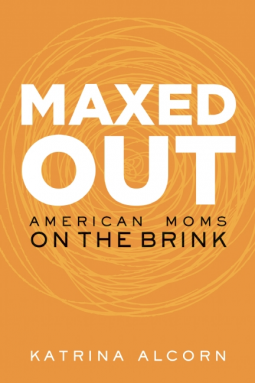
Maxed Out
American Moms on the Brink
This title was previously available on NetGalley and is now archived.
Send NetGalley books directly to your Kindle or Kindle app
1
To read on a Kindle or Kindle app, please add kindle@netgalley.com as an approved email address to receive files in your Amazon account. Click here for step-by-step instructions.
2
Also find your Kindle email address within your Amazon account, and enter it here.
Pub Date Aug 28 2013 | Archive Date Sep 9 2013
Perseus Books Group, Seal Press | Seal Press
Description
Alcorn wondered how a woman like herself, with a loving husband, a supportive boss, three healthy kids, and a good income, was unable to manage the demands of having a career and a family. Over time, she realized that she wasn’t alone. As she questioned other working moms, she realized that many women were struggling to do it all, crashing, and feeling as if they were somehow failing as a result.
Mothers are the breadwinners in two-thirds of American families, yet the American workplace is uniquely hostile to the needs of parents. Weaving in surprising research about the dysfunction between the careers and home lives of working mothers, as well as the consequences to women’s health, Alcorn tells a deeply personal story about “having it all,” failing miserably, and what comes after. Ultimately, she offers readers a vision for a healthier, happier, and more productive way to live and work.
Available Editions
| EDITION | Paperback |
| ISBN | 9781580055239 |
| PRICE | $16.00 (USD) |
Available to Buy
Buy on Amazon Buy on BN.com Buy on Bookshop.orgAverage rating from 2 members
Featured Reviews
 Rhiannon J, Reviewer
I usually stick to fiction but I'm always interested in overworked family non-fiction. I loved my Gender and Work class at college and find it so fascinating that there are so many problems facing today's working families and so few solutions. Katrina Alcorn provides readers with her own first person account of a growing career and family. Even after reading other similar accounts it is still always reassuring to read yet another woman's struggle. It validates most women's internal thoughts with the relief that "I'm not alone" and "Someone else feels this way?' or simply "Ok. So I'm not crazy."Alcorn quotes Arlie Hochschild and Anne Marie Slaughter and references many previous works that mothers have read in the hopes that there is a secret in there somewhere of how to make it all work. How to have it all. Alcorn provides several suggestions such as a "GI Bill" for parents wishing to reenter the workforce and list of ways each personal can individually work to bring about changes. So many mothers are struggling that they rarely have a free moment to pee alone, let alone bring about radical changes, but Alcorn provides small steps that can affect a big change.
One quote from the book really stood out for me and I feel it encompasses a large demographic of mothers. When Katrina is negotiating with her boss, Sonya, (who is also a mother) over her maternity leave, Sonya states "I never had the luxury of working four days a week." But Katrina hears that "she didn't get this time; why did I think I was entitled to it?" The resentment of and jealousy among mothers is rarely discussed and instead the media turns out Mommy Wars pieces. If a mom had to pump breastmilk sitting in a bathroom it is understandable why she would resent that her company now provides lounges. Or when she's juggled child care for years and now the new mothers are able to bring their babies into the office. I would like to say that I would be thinking "Good for them" and "glad these changes are coming about" but I know that I would be silently seething and thinking "how unfair" because that was not an option for me. Ugly truth, but when you have been desperate for a break of any kind, and are "maxed out" it is going to be difficult to look at the big picture. This demographic of women could be just as difficult to get on the side of change as the patriarchal corporations.
While this book does focus on mothers, it is important to acknowledge that changing family dynamics do not limit the maxing out of parents to mothers exclusively. However a family is structured, it needs support and flexibility to balance work and life. While families have changed, corporate practices have not and everyone is suffering. The current models are deficient. It is time to look to successful models and decide which policies can be incorporated.
I will definitely recommend this book to the multitude of mothers I encounter everyday. Maxed Out is an important contribution to the discussions of gender and the work/life balance and will become as referenced as its predecesors.
 Annie F, Reviewer
Synopsis:
Subtitled: American Moms on the Brink.
Review:
Where on earth to begin with my praise for Maxed Out? Katrina Alcorn‘s memoir/cultural analysis is an honest, well-researched, and absolutely necessary addition to the conversation about women in the workplace. The political is personal, and she astutely uses her own story of corporate burnout and panic attacks to highlight the ways in which corporate culture and expectations are at odds with what is best for families with children.
Alcorn puts her arguments into a larger context, showing how the very act of having children puts a working parent–especially a mother–into an adversarial relationship with every single person and entity with which she is connected. The notion that balancing work obligations and family commitments is a juggling act of epic proportions is hardly novel ground, but Alcorn offers levels of detail that really bring the issues to life.
And while Alcorn raises the usual issues of better maternity leave (and paternity leave, too), she also paints a picture of corporate life that makes you wonder whether or not it’s healthy for the childless, either. For a taste of her views on the subject, check out herreview of Sheryl Sandberg’s Lean in. Here’s a great quote:
The problem we should be talking about is why jobs in leadership—any job, really—require people to work such crushingly long hours, to never take any extended time off, and never ever—heaven forbid—unplug. When we frame the problem, again and again, around personal choices, we let the workplace, and society, off the hook.
Great stuff, and a worthy addition to a vital conversation.