Description
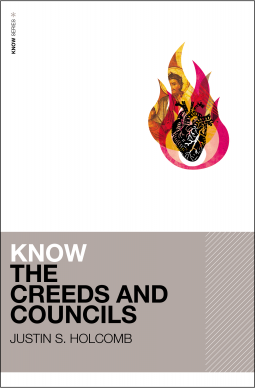
In every generation, the Christian church must interpret and restate its bedrock beliefs, answering the challenges and concerns of the day. This accessible overview walks readers through centuries of creeds, councils, catechisms, and confessions---not with a dry focus on dates and places, but with an emphasis on the living tradition of Christian belief and why it matters for our lives today. As a part of the KNOW series, Know the Creeds and Councils is designed for personal study or classroom use, but also for small groups and Sunday schools wanting to more deeply understand the foundations of the faith. Each chapter covers a key statement of faith and includes a discussion of its historical context, a simple explanation of the statement’s content and key points, reflections on contemporary and ongoing relevance, and discussion questions.
In every generation, the Christian church must interpret and restate its bedrock beliefs, answering the challenges and concerns of the day. This accessible overview walks readers through centuries of...
Description
In every generation, the Christian church must interpret and restate its bedrock beliefs, answering the challenges and concerns of the day. This accessible overview walks readers through centuries of creeds, councils, catechisms, and confessions---not with a dry focus on dates and places, but with an emphasis on the living tradition of Christian belief and why it matters for our lives today. As a part of the KNOW series, Know the Creeds and Councils is designed for personal study or classroom use, but also for small groups and Sunday schools wanting to more deeply understand the foundations of the faith. Each chapter covers a key statement of faith and includes a discussion of its historical context, a simple explanation of the statement’s content and key points, reflections on contemporary and ongoing relevance, and discussion questions.
Available Editions
| EDITION | Other Format |
| ISBN | 9780310515098 |
| PRICE | $12.99 (USD) |
Available on NetGalley
| Download (PDF) |
Featured Reviews
Jennifer S, Bookseller
|
My Recommendation
|
|
This was a good starter book on knowing the major creeds and councils throughout the history of Christianity. I have to say, I was relieved when I read through this book and I didn't disagree with the key components of Christianity. I'm not a heretic! Well, I guess I still may be, but any doubts I may have had about my belief structure have been mostly put to rest. So score one for Sunday school. This is a rather dense topic, but it was broken down into manageable chunks that didn't overwhelm. I really appreciated the paragraph structure, as it allowed me to read a paragraph, think about it and either continue or re-read it as necessary. That may sound kind of obvious and simple, but having read other works that are not so easily broken down, case in point Bonhoeffer's Ethics, I really REALLY appreciate bite-sized chunks. I would highly recommend this to someone who wants to learn more about the history of the Christian church and who is interested in getting an overview of the beliefs of the Church and how they came to be. It should be required reading for anyone who calls themselves a Christian. As I've said before in various ways, we need to know our past so we can know how we got to where we are and if we want to avoid past mistakes in our future. This is a good book to make sure one is personally on track and to make sure our Church as a whole is also traveling the right path. 4.5 stars. Highly recommended. My thanks to NetGalley and Zondervan Academic for an eARC copy of this book to read and review. |
My Recommendation
|
|
My Recommendation
|
|
An anonymous person once said, "History repeats itself because no one was listening to it the first time." It is a way to say that if we do not learn well the lessons of history, we are poised to repeat the same mistakes over and over again. This is one motivation for us to learn history, and for Christians, to learn the historical settings and background to the majestic statements of tradition and faith. Four of such majors are ably dealt with in this book: Creeds, Confessions, Catechisms, and Church Councils. Episcopalian Priest, Professor, as well as author, Dr Justin Holcomb guides us through the historical background material, the theological challenges faced, the formation of councils, the interplay of powers in both Church and State, and most importantly, the reasons for the creeds and major theological statements made over the centuries. Some of the creeds mentioned are: - Apostles' Creed (ca 140) - Nicene Creed (325 AD) - Chalcedonian Creed (451 AD) - Athanasian Creed (400-500 AD) - ... The introduction is a helpful explanation of what creeds, confessions, catechisms, and councils are, each chapter begins with a brief historical background followed by an explanation of what the creed or statement is about. Holcomb then shows us the relevance of the creeds for people then and for us now before concluding with a set of discussion questions and resources for further research. It is important to recognize that Creeds and Councils often go hand in hand. You need councils to come together to agree on a creedal statement. Creeds themselves cannot magically appear without much due diligence and faithful study of the sacred documents. According to Holcomb, creeds are fixed formulas based on doctrines derived from Scripture, that mark out the boundaries of faith. Confessions will be the details that describe the tenets of the faith within the creedal boundaries. Catechisms are matters of doctrine and beliefs worded in a Question-and-Answer format. Councils are the authorities charged with the task of crafting out statements on behalf of the community of faith. An important clarification is also made by Holcomb, that creeds are not dogmas schemed into reality by evil councils or extremist people. They are there to defend people from "oversimplification" and heresy, to help us keep the faith. Thus we read about the Apostles' Creed being the oldest, yet the most unifying creed used among the vast majority of people in Christianity. Even today, it is often the basis of Christian unity. The Nicene Creed was urgently set in place due to heresies that threaten to split the Church. A major heresy was Arianism that questions the divinity of Jesus. We also read about how the various councils tackle the host of heretic positions that attack the Trinity, Christ's Identity, the doctrine of the Holy Spirit, The Athanasian Creed was a major statement that affirms the Trinitarian doctrine, thanks largely to the contributions of Athanasius. Yet, battles continue to rage. The baton was passed on later to the Cappadocian Fathers who played significant roles in the three council meetings at Constantinople. Closer to the 16th Century Protestant Reformation, the council of Trent met to discuss inner reformation of the Catholic Church, where the limits to the authority of the Pope were deliberated. The catechisms such as the Heidelberg, the Anglican 39 Articles of Faith, the Westminster Confessions, and the modern Lausanne Covenant were also covered, to give readers a broad scope of creedal statements from AD 140 to the present. So What? ======== Holcomb's main purpose is to help us understand the importance and the difficult journeys taken by our predecessors to give us the classic creeds of today. It is brief but contains most of the essential stuff for the busy person. It is written in clear everyday language without heavy jargon in order to reach a general audience. It gives us a chronological flow of the major creeds, confessions, catechisms, and councils that most Christians will need to know. Above all, Holcomb brings back a renewed appreciation and respect for the creeds that most people use and take for granted. In fact, knowing the creeds and the historical background gives modern Bible readers a bigger and better context when reading New Testament texts, to grapple with the key theological issues of that day, as well as to be thankful for the gifts the Early Church had given us. We are very much a recipient of a lot of their hard work, and we are called to do the same for the next generation and the generations to come. Each generation will need to fight its own battle. The previous generations have done their part. It is time for us to do ours when the appropriate time beckons. Let me close with the words of one of my favourite professor who has a tremendous regard for catechisms, which he said: "is designed as a resource manual for the renewal of Anglican catechetical practice. It presents the essential building blocks of classic catechetical instruction: the Apostles’ Creed, the Lord’s Prayer, and the Ten Commandments (the Decalogue). To these is added an initial section especially intended for those with no prior knowledge of the Gospel; as such, this catechism attempts to be a missional means by which God may bring about both conversion to Christ and formation in Christ." "Tradition is the fruit of the Spirit’s teaching activity from the ages as God’s people have sought understanding of Scripture .It is not infallible, but neither is it negligible, and we impoverish ourselves if we disregard it ." (J. I. Packer) This book is a wonderful primer for anyone wanting to know more about creeds and councils, without having to plow through thick research material. For Holcomb has already done the heavy lifting for us. Rating: 4.5 stars of 5. conrade This book is provided to me courtesy of Zondervan Academic and NetGalley in exchange for an honest review. All opinions offered above are mine unless otherwise stated or implied. |
My Recommendation
|
|
My Recommendation
|
|
Other than the Apostle's Creed, are you familiar with other creeds? How about confessions? What are they? What's the difference between them? What about catechism? Why were they created? These and many other related questions would be answered by Holcomb in this book. Holcomb first defines the various terms used in this book, creeds, confessions and catechism. Following which these are then presented in a chronological order, allowing the readers to see how the creeds have developed, deepen and also modified in their wording to be more specific to the various challenges that arose at the different eras. In Creeds, whenever a creed/confession/catechism is presented, 3 sections would always be explored: the historical background, content and relevance. Holcomb is especially strong in giving the historical context of the creeds/confession/catechism, often highlighting the historical framework/situations where the creeds are contextualised, allowing you to see the importance of developing such creeds/confessions/catechism. What is interesting is that Holcomb not only includes Protestant creeds and confession, in this book you can also read about the Romans Catholic Creeds and Councils, and Holcomb does not skimp on the explanation about them. Lastly, under relevance, Holcomb is perceptive about the importance of creeds and confessions and the need for christians to be familiar with the them. Even when discussing about the Vatican II, Holcomb is still able to draw relevant application for christians and thus gives excellence support for the christian to be well versed in them. This would be a great book for any christian who would like to be interested to learn not just about the creeds/confessions/catechism itself, but along side with it a thorough understanding of the historical context behind it. Although this might be a little too overbearing, but I would have wished that Holcomb could have added a chapter on the Second London Baptist Confession. Still this trivial lack has not in any way made the book any less valuable. This remains to be an excellent and informative guide for any christian who wants to be informed in this area. Disclaimer: I received this book free from the publisher in return for an honest review. |
My Recommendation
|
|
My Recommendation
|
|
This short concise book is another great addition to the "Know" series that Zondervan is publishing. In this volume we are given a quick tour of the Creeds and Catechisms that have developed throughout the centuries since the Church was established It also gives an excellent overview of the many different "councils" that took place to help put together the Creeds. Justin Holcomb again gives us a good book that can be used as a discussion starter for small groups as well as a book that will give a basic education to the laity in regards to the history of the Creeds and Councils that have defined the Christian Church for centuries. I highly recommend this for anyone who needs a brush up on their history or is just looking into these items for the very first time. I think it will also be a great book for Pastors to use as part of a series of books to help educate their congregants that are joining their church and need some basic foundational grounding. Enjoy! |
My Recommendation
|
Additional Information
Available Editions
| EDITION | Other Format |
| ISBN | 9780310515098 |
| PRICE | $12.99 (USD) |
Available on NetGalley
| Download (PDF) |
Featured Reviews
Jennifer S, Bookseller
|
My Recommendation
|
|
This was a good starter book on knowing the major creeds and councils throughout the history of Christianity. I have to say, I was relieved when I read through this book and I didn't disagree with the key components of Christianity. I'm not a heretic! Well, I guess I still may be, but any doubts I may have had about my belief structure have been mostly put to rest. So score one for Sunday school. This is a rather dense topic, but it was broken down into manageable chunks that didn't overwhelm. I really appreciated the paragraph structure, as it allowed me to read a paragraph, think about it and either continue or re-read it as necessary. That may sound kind of obvious and simple, but having read other works that are not so easily broken down, case in point Bonhoeffer's Ethics, I really REALLY appreciate bite-sized chunks. I would highly recommend this to someone who wants to learn more about the history of the Christian church and who is interested in getting an overview of the beliefs of the Church and how they came to be. It should be required reading for anyone who calls themselves a Christian. As I've said before in various ways, we need to know our past so we can know how we got to where we are and if we want to avoid past mistakes in our future. This is a good book to make sure one is personally on track and to make sure our Church as a whole is also traveling the right path. 4.5 stars. Highly recommended. My thanks to NetGalley and Zondervan Academic for an eARC copy of this book to read and review. |
My Recommendation
|
|
My Recommendation
|
|
An anonymous person once said, "History repeats itself because no one was listening to it the first time." It is a way to say that if we do not learn well the lessons of history, we are poised to repeat the same mistakes over and over again. This is one motivation for us to learn history, and for Christians, to learn the historical settings and background to the majestic statements of tradition and faith. Four of such majors are ably dealt with in this book: Creeds, Confessions, Catechisms, and Church Councils. Episcopalian Priest, Professor, as well as author, Dr Justin Holcomb guides us through the historical background material, the theological challenges faced, the formation of councils, the interplay of powers in both Church and State, and most importantly, the reasons for the creeds and major theological statements made over the centuries. Some of the creeds mentioned are: - Apostles' Creed (ca 140) - Nicene Creed (325 AD) - Chalcedonian Creed (451 AD) - Athanasian Creed (400-500 AD) - ... The introduction is a helpful explanation of what creeds, confessions, catechisms, and councils are, each chapter begins with a brief historical background followed by an explanation of what the creed or statement is about. Holcomb then shows us the relevance of the creeds for people then and for us now before concluding with a set of discussion questions and resources for further research. It is important to recognize that Creeds and Councils often go hand in hand. You need councils to come together to agree on a creedal statement. Creeds themselves cannot magically appear without much due diligence and faithful study of the sacred documents. According to Holcomb, creeds are fixed formulas based on doctrines derived from Scripture, that mark out the boundaries of faith. Confessions will be the details that describe the tenets of the faith within the creedal boundaries. Catechisms are matters of doctrine and beliefs worded in a Question-and-Answer format. Councils are the authorities charged with the task of crafting out statements on behalf of the community of faith. An important clarification is also made by Holcomb, that creeds are not dogmas schemed into reality by evil councils or extremist people. They are there to defend people from "oversimplification" and heresy, to help us keep the faith. Thus we read about the Apostles' Creed being the oldest, yet the most unifying creed used among the vast majority of people in Christianity. Even today, it is often the basis of Christian unity. The Nicene Creed was urgently set in place due to heresies that threaten to split the Church. A major heresy was Arianism that questions the divinity of Jesus. We also read about how the various councils tackle the host of heretic positions that attack the Trinity, Christ's Identity, the doctrine of the Holy Spirit, The Athanasian Creed was a major statement that affirms the Trinitarian doctrine, thanks largely to the contributions of Athanasius. Yet, battles continue to rage. The baton was passed on later to the Cappadocian Fathers who played significant roles in the three council meetings at Constantinople. Closer to the 16th Century Protestant Reformation, the council of Trent met to discuss inner reformation of the Catholic Church, where the limits to the authority of the Pope were deliberated. The catechisms such as the Heidelberg, the Anglican 39 Articles of Faith, the Westminster Confessions, and the modern Lausanne Covenant were also covered, to give readers a broad scope of creedal statements from AD 140 to the present. So What? ======== Holcomb's main purpose is to help us understand the importance and the difficult journeys taken by our predecessors to give us the classic creeds of today. It is brief but contains most of the essential stuff for the busy person. It is written in clear everyday language without heavy jargon in order to reach a general audience. It gives us a chronological flow of the major creeds, confessions, catechisms, and councils that most Christians will need to know. Above all, Holcomb brings back a renewed appreciation and respect for the creeds that most people use and take for granted. In fact, knowing the creeds and the historical background gives modern Bible readers a bigger and better context when reading New Testament texts, to grapple with the key theological issues of that day, as well as to be thankful for the gifts the Early Church had given us. We are very much a recipient of a lot of their hard work, and we are called to do the same for the next generation and the generations to come. Each generation will need to fight its own battle. The previous generations have done their part. It is time for us to do ours when the appropriate time beckons. Let me close with the words of one of my favourite professor who has a tremendous regard for catechisms, which he said: "is designed as a resource manual for the renewal of Anglican catechetical practice. It presents the essential building blocks of classic catechetical instruction: the Apostles’ Creed, the Lord’s Prayer, and the Ten Commandments (the Decalogue). To these is added an initial section especially intended for those with no prior knowledge of the Gospel; as such, this catechism attempts to be a missional means by which God may bring about both conversion to Christ and formation in Christ." "Tradition is the fruit of the Spirit’s teaching activity from the ages as God’s people have sought understanding of Scripture .It is not infallible, but neither is it negligible, and we impoverish ourselves if we disregard it ." (J. I. Packer) This book is a wonderful primer for anyone wanting to know more about creeds and councils, without having to plow through thick research material. For Holcomb has already done the heavy lifting for us. Rating: 4.5 stars of 5. conrade This book is provided to me courtesy of Zondervan Academic and NetGalley in exchange for an honest review. All opinions offered above are mine unless otherwise stated or implied. |
My Recommendation
|
|
My Recommendation
|
|
Other than the Apostle's Creed, are you familiar with other creeds? How about confessions? What are they? What's the difference between them? What about catechism? Why were they created? These and many other related questions would be answered by Holcomb in this book. Holcomb first defines the various terms used in this book, creeds, confessions and catechism. Following which these are then presented in a chronological order, allowing the readers to see how the creeds have developed, deepen and also modified in their wording to be more specific to the various challenges that arose at the different eras. In Creeds, whenever a creed/confession/catechism is presented, 3 sections would always be explored: the historical background, content and relevance. Holcomb is especially strong in giving the historical context of the creeds/confession/catechism, often highlighting the historical framework/situations where the creeds are contextualised, allowing you to see the importance of developing such creeds/confessions/catechism. What is interesting is that Holcomb not only includes Protestant creeds and confession, in this book you can also read about the Romans Catholic Creeds and Councils, and Holcomb does not skimp on the explanation about them. Lastly, under relevance, Holcomb is perceptive about the importance of creeds and confessions and the need for christians to be familiar with the them. Even when discussing about the Vatican II, Holcomb is still able to draw relevant application for christians and thus gives excellence support for the christian to be well versed in them. This would be a great book for any christian who would like to be interested to learn not just about the creeds/confessions/catechism itself, but along side with it a thorough understanding of the historical context behind it. Although this might be a little too overbearing, but I would have wished that Holcomb could have added a chapter on the Second London Baptist Confession. Still this trivial lack has not in any way made the book any less valuable. This remains to be an excellent and informative guide for any christian who wants to be informed in this area. Disclaimer: I received this book free from the publisher in return for an honest review. |
My Recommendation
|
|
My Recommendation
|
|
This short concise book is another great addition to the "Know" series that Zondervan is publishing. In this volume we are given a quick tour of the Creeds and Catechisms that have developed throughout the centuries since the Church was established It also gives an excellent overview of the many different "councils" that took place to help put together the Creeds. Justin Holcomb again gives us a good book that can be used as a discussion starter for small groups as well as a book that will give a basic education to the laity in regards to the history of the Creeds and Councils that have defined the Christian Church for centuries. I highly recommend this for anyone who needs a brush up on their history or is just looking into these items for the very first time. I think it will also be a great book for Pastors to use as part of a series of books to help educate their congregants that are joining their church and need some basic foundational grounding. Enjoy! |
My Recommendation
|