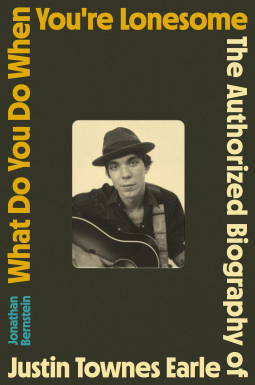
What Do You Do When You're Lonesome
The Authorized Biography of Justin Townes Earle
This title was previously available on NetGalley and is now archived.
Send NetGalley books directly to your Kindle or Kindle app
1
To read on a Kindle or Kindle app, please add kindle@netgalley.com as an approved email address to receive files in your Amazon account. Click here for step-by-step instructions.
2
Also find your Kindle email address within your Amazon account, and enter it here.
Pub Date Jan 13 2026 | Archive Date May 28 2026
Grand Central Publishing | Da Capo
Description
"A superb biography of a singular life."--Kirkus Reviews (starred review)
A Rolling Stone journalist presents the story of the late singer-songwriter Justin Townes Earle.
When Justin Townes Earle died of an overdose alone in his Nashville apartment, his death sent waves of grief through the country-Americana music community. The son of alt-country hellraiser Steve Earle had long struggled with mental illness and various addictions. There had been encouraging periods of long-term sobriety and active recovery in his adult life, including the years that led up to his career peak when he released the 2010 masterpiece Harlem River Blues, a career-making album of rambling folk blues set to Southern Gospel.
He sang of cramped Brooklyn apartments and crippling hangovers, about emotional displacement, economic anxiety, and the wandering that characterized his feral, formative years as a rootless kid rambling around Nashville, developing his own unique guitar style and absorbing the musical influences that surrounded him. He was anointed by critics as the next coming of the authentic troubadour. By the time of his death, he’d recorded and released eight albums, creating a striking and original body of work.
Jonathan Bernstein, with the full cooperation of the Justin Townes Earle estate, unravels in these pages a short but incredibly creative life, and reveals the backstories behind Justin’s greatest songs (“Mama’s Eyes,” “White Gardenias”) and what happened when it all fell apart while also capturing a shadow world of the neglected children of Nashville legends who wrestle with the legacies of their hard-living, road-weary, often absent parents.
Justin’s journey to near-stardom is a harrowing story shot through with moments of clarity and promise, including his marriage to his wife Jenn Marie Earle and the birth of their daughter. But what Earle called “the myth”—the idea that one must suffer for one’s art—proved to be too powerful.
This heartbreaking, deeply researched tale is an exemplary music biography.
Available Editions
| EDITION | Other Format |
| ISBN | 9780306833274 |
| PRICE | $30.00 (USD) |
| PAGES | 368 |
Available on NetGalley
Available to Buy
Buy on Amazon Buy on BN.com Buy on Bookshop.orgAverage rating from 8 members
Featured Reviews
 julie k, Reviewer
Thank you, Grand Central Publishing, for providing the copy of What Do You Do When You're Lonesome,
The Authorized Biography of Justin Townes Earle by Jonathan Bernstein. I was a fan of Steve Earle and JTE and his music slipped under the radar for me, but I’m sorry it did after reading this heartbreaking book. Even though I knew the inevitable ending, I kept hoping Justin would find some happiness in his life, and I almost cheered when he got clean the first time and had some peaceful years. I loved learning about his life and what shaped him, mainly as a cautionary tale about addiction and the connection to mental health.
Dan O, Bookseller
My thanks to NetGalley and Grand Central Publishing Da Capo for an advance copy of a singer songwriter and talent who seemed almost doomed from the start, burdened with the myths that make the creative world so hard for many to make it in, and with a last name that shadowed almost everything he did.
I have gotten to the age in life where I know there is really nothing more left to be excited about. No great romances, no book I always thought I would write, no great achievements. Retail will be my employment until AI replaces me, or the government decides that I am useless to capitalism. I'm fine with that. What does bother me as I have gotten older is to see people never get the chance to shine, when they so deserve it. People with real skills, real abilities to help people by entertaining them, something we really need today. Art helps us deal so much with what goes wrong, and to see creatives go off on the wrong path is truly a tragedy. Especially when that life ends so early, with so much unwritten, unsung, and untapped. Justin Townes Earle had skill, a drive to both create, and a drive to self-destruct. Much about this talented performer has probably been forgotten in our quick as a blink social media world. This fine biography will hopefully introduce more people to this artist, whose name almost destined him to die young. What Do You Do When You're Lonesome: The Authorized Biography of Justin Townes Earle by writer and editor Jonathan Bernstein is a biography told in full about this man, one who tap the pain that he lived with to create his art and lead to his own self-destruction, and a body of work that should be remembered better.
Justin Townes Earle was the son of Steve Earle, the country rebel who's early albums brought a new harder edge to country music and Carol Ann Hunter Earle. Justin was named for Justin Hayward of the Moody Blues, and Townes Van Zant, a country singer who was almost famous numerous times, who died early before he could make it. Steve Earle career hit just about the time Justin was born, and Steve hit the road and in Justin's words never really came back. Carol raised Justin, who had behavior problems and probably ADD. Justin loved music of all kinds, but it was a chance listening of Nirvana's Unplugged album that introduced him to the music of Leadbelly and Lighting Hopkins. And Justin was never the same. Justin leaned to play with a heavy thumb, to write songs that sounded 165 years old, as he would say. Busking and small bands became his thing, traveling with his father, living in Chicago learning and playing as he went. Slowly he began to get a name, and just as quickly besmirch it, taking drugs before shows and ruining sets, and hurting those around him. Things started to move in ways that were maybe beyond him. Justin began to get more popular, win awards made a album that got him a gig on David Letterman, married had a daughter, and began to spiral.
A book that was filled with so much potential, and one that makes one sad, mad and glad all in the same sentence. Justin had a lot of talent, but he seemed to be a part of what his father, Steve Earle, called a myth of suffering for art. Steve suffered, and in turn so did his son. This is an excellent look at music, the cost that music can take on a person, a family and those around them, and what music can do to heal sometimes. And sometimes it isn't enough. Bernstein had incredible access to friends and family, and it shows with a portrait of an artist as a damaged young man, with so much to offer, but uncertain how to do so. The writing is really quite good. One gets a real understanding of Justin, his friends and family, the addictions and the addiction that music can be.
I enjoyed this book, and felt sad reading it. I would have liked to have heard more music, which is kind of selfish, as I am sure his parents would like their son alive, and his daughter would love to have her father. There are moments where you can see the decisions made had great consequences in the future for Justin. Something many biographies don't really try to understand. I enjoyed this quite a bit, and have now found something else to listen to, and think of what might have been. I look forward to more books by Jonathan Bernstein.
Michael S, Reviewer
…According to the laws of the myth, self-sacrifice yields material, and pain is a currency cashed out in the form of two verses, a chorus, and a bridge. The myth prioritized song over selfhood, promoting the idea that the more one damages the latter, the more beautiful the former…
What a sad story about another young and gifted artist wracked by substance abuse and his failure to deal with and come to grips with his traumatic past. Justin Townes Earle just couldn’t let it go; all those resentments, self-loathing, and disconnects he faced daily. And it certainly didn’t help to have an upstaging and egomaniac father named Steve Earle either.
“The trauma he had when he was little was because the adults in his life were paying attention to what was going on in their lives and their trauma and not paying attention to how it was affecting kids,” she (Lou-Anne Gill) said years later.
When parents are dealing with their own shit it is inevitable that their children will be affected. But the laser focus must remain centered on personal recovery. Saving oneself is never pretty, nor is it fair to those around you. But it has to be. And most of us somehow survive it all. But Justin, for whatever reason, refused the help required for his own recovery. Seven trips to expensive rehab centers resulted in little effect on maintaining long-term sobriety as he continued to insanely wrestle with the demons that possessed him. Simple (and free) twelve-step programs along with maintaining group attendance with others going through the same struggles have proven to be far more effective than expensive rehabs. But the stigma of AA persists and proves to prevent many from attending these meetings on a regular basis.
…Whenever I get wound up and worried about the state of America today,” he (Justin) posted that August, “I stop and look at my daughter and it only makes it worse.”
The unsettling state of our country beginning in 2016 with its rankling politics, and then 2020’s Covid 19 debacle, certainly has resulted in even more of the same. But again, staying sober and engaged with others also in recovery would have made a huge difference for Justin. It is possible that Justin Townes Earle didn’t have to die so young and upset with himself and others. I can’t imagine even the white-knuckle pain he regularly inflicted on himself and others due to his stubborn and death-defying refusal to get healthy. The final song on his very last album says it all.
(The song Talking to Myself)... was an unusually stark self-portrait of a haunted man, the type of song Justin used to shelve after realizing he’d written something too exposing…He wanted the world to understand he’d spent his life trying to forgive—and seek forgiveness—but remained too plagued by his past to do so. He wanted to share secrets he’d rarely uttered aloud: that he was scared to fall asleep alone at night, that he felt incapable of true intimacy. He wanted the world to know he needed help…
The drinks bring no joy to me,
I just can’t remember when
All the drugs began to fail,
Left me only with the lonely child
within
So I tried to love and I failed
Put my heart on a shelf
These are things I say only when I’m
talking to myself
Readers who liked this book also liked:
James McBride
General Fiction (Adult), Historical Fiction, Literary Fiction

Alexis Wolfe Mbassa; Gregory E. Jacobs
Arts & Photography, Biographies & Memoirs, Entertainment & Pop Culture

Lee Chia-Ying
General Fiction (Adult), Literary Fiction, Women's Fiction

Simon Parkin
Entertainment & Pop Culture, History, Professional & Technical