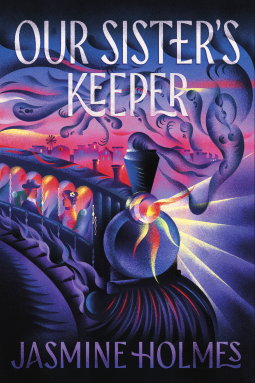
Our Sister's Keeper
This title was previously available on NetGalley and is now archived.
Send NetGalley books directly to your Kindle or Kindle app
1
To read on a Kindle or Kindle app, please add kindle@netgalley.com as an approved email address to receive files in your Amazon account. Click here for step-by-step instructions.
2
Also find your Kindle email address within your Amazon account, and enter it here.
Pub Date Jun 9 2026 | Archive Date Jun 9 2026
Talking about this book? Use #OurSistersKeeper #NetGalley. More hashtag tips!
Description
USA TODAY BESTSELLER
A gripping blend of historical fiction and Southern gothic psychological horror, Our Sister’s Keeper is a fierce exploration of Black sisterhood, rage, and resistance.
"For fans of Octavia Butler’s 1979 classic Kindred or Erin Crosby Eckstine's Junie."—Booklist
Mississippi, 1927. The groanings are coming.
No town is perfect, but East Cobb comes close. It’s a wealthy all-Black Free Town—untouched by white oppression—where ambitious Thea Elliot and her husband plan to make good on their big dreams. Little do they know that the idyllic town teems with ghoulish, walking nightmares . . . that only the women can see.
Marah knows the groanings well. She is one of the carriers—women with the ability to pull traumatic memories from men. Populated by men entirely freed of their pain, East Cobb has flourished, even as the remnants of their memories haunt the town’s women. When an unexpected death drives Marah to discover more about her own power, Thea’s and Marah’s worlds collide. The sisters must confront the rotten core at the heart of East Cobb’s prosperity and choose what—and who—will survive the reckoning.
Advance Praise
“Jasmine Holmes’s foray into fiction feels like a homecoming. With warmth and a wealth of insight, Holmes skillfully crafts in East Cobb a setting and story that does what only art can; it illumines the past and the present, creating for the reader a clarity that lasts beyond the page. Our Sister’s Keeper is breathtaking, too lovely for a nightmare and too tragic for a dream.” —Bethany. C Morrow, bestselling author of A Song Below Water and So Many Beginnings
“Our Sister’s Keeper combines historical details with incredibly imaginative fiction, making for an unforgettable story centered on women who bear the burdens of others. But what happens when they tire of suffering traumas that aren’t theirs, when it becomes clear that strength can be both a blessing and a curse? Set in the post–Reconstruction era South, Jasmine Holmes’s debut novel is a fascinating tale of past and present colliding in the twistiest of ways. This is a story of sisterhood in the face of obstacles closing in from every corner, and a testament to the strength and power of women united.” —Del Sandeen, author of This Cursed House
Marketing Plan
- Social campaign with over 5M direct reach plus paid promotions
- National print, broadcast, and online media campaign including radio and podcast interviews
- Extensive review copy mailings to booksellers, media, and influencers
- Netgalley and Goodreads promotions
- NYC launch event with broad influencer and media attendance
Available Editions
| EDITION | Other Format |
| ISBN | 9781967967100 |
| PRICE | $19.95 (USD) |
| PAGES | 336 |
Available on NetGalley
Available to Buy
Buy on Amazon Buy on BN.com Buy on Bookshop.orgAverage rating from 424 members
Featured Reviews
 Pixel B, Reviewer
I don’t even have the words to describe this book, I think this was the first time where it literally felt like I was staying up late into the night just to find out what was going to happen next, literally had me on the edge of the seat of tissues to wipe away my tears 😭.
Jasmine Holmes has created a story that is equally parts gripping and tragically moving. A book which throws you into the world of East Cobb, where woman with the the ability to pull the pain and suffering from the men in town bear their heavy burdens. This is one Southern Gothic novel that will burrow deep and stick with you.
I have absolutely no criticisms on this book, and I for one cannot wait to see what the author comes up with next!!🤩
 Andre W, Reviewer
This is so good yet so sad. The twist shocked me and I usually am good at catching them!
The commentary on burdens and the resilience of Black women and their rage, the cost of having someone else carry the burden so you can have everything you want. This will be in my mind forever.
Jasmine wrote something amazing here and I can't wait to see what else she writes!
Thank you Bindery for the ARC!
Ladi A, Reviewer
At first, this story moved at a slow burn, carefully laying the groundwork, but once the momentum built, the twist completely caught me off guard. I loved how this book forced me to think about the burdens our partners may carry and the weight, physical or emotional, that love sometimes asks us to bear. At its heart, it’s also a testament to the quiet, unshakable strength of women.
Though my feelings toward the women of the town never softened, Thea’s journey was a haunting ride. Her relentless need to press the others for honesty, instead of trusting her instincts, or her husband, made her path frustrating at times. Still, her journey kept me hooked, and I couldn’t look away from the unraveling truths.
With Mississippi, 1927 as its backdrop, Our Sister’s Keeper blends historical fiction and Southern gothic horror beautifully. It’s a superb, thought provoking read that lingers in your mind and leaves you reflecting on the heavy price of carrying another’s pain.
 Reviewer 1222164
OMG OMG OMG. This was incredible. I devoured it in less than 24 hours. And a satisfying ending?! And the commentary on black women’s strength, communal trauma, the cost of having it all?! This one will stay with me for a while. Thank you to Bindery Books for the ARC!
Amber K, Reviewer
This was a 5⭐️ read for me.
It’s a slow burn as you are introduced to the cast of characters and the town of East Cobb. What unfolds is a story of marriage, friendship, loss, trauma and rage. The twist at the end made me gasp. I loved the way Holmes weaved and revealed storylines.
The book made me question what would we do to relieve our loved one’s suffering? What would we inflict on others to ensure our family’s safety? What did it mean to be a young Black family in 1920s America looking for safety and learning to be a generation that was ‘free’? Can you yourself be free when you are keeping others freedom from them? If you lay your burdens on others, what new burdens do you yourself pick up?
Rose T, Reviewer
Jasmine Holmes frames this book around a simple question that carries real weight: what does it look like to care for the women beside us when life is ordinary, and when it is not. The opening chapters set the tone with clarity. Holmes writes as a teacher and a sister in the faith, part memoir, part exhortation, part “this is how I learned it the hard way.” The first section moves quickly, each chapter anchored to a lived situation that makes the point concrete. A conversation that went sideways becomes a lesson on listening. A season of loneliness becomes a case study in what genuine hospitality requires. I appreciated how she orients readers without dragging us through a long preface. The stakes are not abstract; they sit in kitchens, group texts, and church foyers where small decisions add up to a culture.
The structure feels intentional. Chapters often begin with a scene or a memory, step back to name the principle, then return to practice with a short list of what helped and what did not. That rhythm keeps the book readable. You can take a chapter at a time, then set it down and try one concrete change. The middle third slows in a good way, making room for hard topics that need more space: envy, conflict, apology that actually repairs, the way cultural baggage sneaks into spiritual language. Holmes brings in other voices with brief spotlights that widen the lens without turning the book into an anthology. A few topics begin to echo each other by the two-thirds mark. Trimming one repeated angle would sharpen momentum and make the final section land even harder.
Holmes’ voice is steady and warm. She writes with the calm of someone who has sat through a lot of conversations and decided that patience is not passive. Scripture appears as a frame for discernment rather than a blunt instrument. When she references a passage, she connects it to the people in the room and asks what obedience would look like on a Tuesday. The prose is contemporary but not breathless, careful with terms that can carry different meanings from church to church. When she uses a loaded word, she tends to define it in context, which keeps readers from different backgrounds on the same page. Dialogue snippets are short, often paraphrased, and they sound like actual people, not strawmen. That restraint helps the counsel feel usable rather than performative.
The strongest thread is the book’s insistence on specificity. “Love your neighbor” is a banner; “text her again next week” is a plan. Holmes pushes for tangible practices: calendars that make room for people, budgets that include blessing, confession that names what happened and what will change. She also puts boundaries in the conversation. Being your sister’s keeper is not being her savior; it is recognizing limits, saying no when you must, and pointing her to better help when the problem is larger than friendship can carry. That balance keeps the tone honest. Encouragement comes with a clear eyed sense of cost.
Not every chapter hits with the same force. A pair of sections revisit similar ground on comparison and platform; combining them would have tightened the argument. I also wanted two moments of nuance earlier in the book: a brief nod to how personality and neurodiversity shape “showing up,” and a paragraph about cross generational friendships that move in both directions. Those additions would make the counsel feel even more inclusive without changing the spine. On the practical side, a simple index and more consistent endnotes would help readers who plan to return to favorite ideas or share quotes with groups.
The audience is clear: women who want a theologically rooted, real life guide to friendship, service, and conflict repair inside local communities. Small groups could read a chapter per week and end with one action step. Mentors will find language that keeps hard conversations kind. Readers outside church spaces who value intentional community may still find the practices useful, since much of the counsel translates easily: own your part, take initiative, listen before you fix, make rhythms that last longer than a mood.
Strengths are easy to name. A grounded, hopeful call to ordinary faithfulness; a voice that treats readers as capable; examples that live where we live. Weaknesses are modest. A touch of repetition in the back half, two places where an earlier nod to complexity would widen the welcome, and a need for cleaner reference tools. None of that changes the bottom line. This is a thoughtful, usable book that invites readers to trade vague ideals for habits that actually love their neighbors.
Reviewer 1617304
The beginning immediately caught my attention because of Marah’s first line. I liked the honesty, then throughout the novel I understood the price of that little bit of honesty. This novel is beautifully written and I don’t just mean the prose. I had a strong visceral reaction and actually had to physically step away. I do encourage folk to buy and read this novel, to bear witness as I’ve heard many people say.
 Heather R, Reviewer
I devoured this book in a few sittings. I don’t even know where to begin. First of all, this was masterful. From the slow unveiling of horrific truths, to plot twists, some I saw coming and some I didn’t, to the atmosphere of the town and the 1920s, to the honoring of individual stories, to the female rage, to the intersectional feminism and anti-racism, to the body horror and psychological horror—-I can’t recommend this enough. Black women I think will find vindication and solidarity in the characters and their rage, though as a white woman I can only assume. But I can say that any woman can feel the rage for the misogyny in this book, and anyone who wants to spend more time understanding Black women’s rage, their burdens, not only for white folks but even for Black men, the way they’ve carried America’s history in a way no one else has, you’re gonna love this book. For what it can teach you and for the ways it will draw you in, mangle you, and spit you back out.
I’ve read only one of Holmes’ nonfiction and it was great, but the fiction writing chops this woman has are just as impressive. She knows her history, and she knows how to write the horror and the rage AND the honoring of individual stories. The book unfolded and peeked into complexities and nuances in the female experience, the Black female experience, in the post emancipation era, in the way Black folks have been used and manipulated by white folks…. Honestly, I can’t recommend it enough.
In summary, if you like dark, psychological horror, body horror, female rage, history, plot twists, and feeling SEEN by an author as a woman of any race, if you liked Ring Shout or the movie Sinners, you’ll love this book.
Thanks to Bindery books and Netgalley for the ARC.
Reviewer 1877790
Bindery Books has done it again! "Our Sister's Keep" by Holmes is another brilliantly written book from a BIPOC author, and I'm already telling everyone I know to pre-order it. This story grabs you immediately; the hook is strong, and the pacing kept me so engrossed I finished it in a weekend while ignoring literally everything else. The blend of historically accurate fiction with nods to Black Wall Streets of the past creates such a rich backdrop, and Holmes doesn't shy away from addressing not only the racism felt from Whites but also the prejudices and assumptions found within the Black community itself, which is so necessary. The horror elements and foreshadowing are expertly woven throughout, creating this psychological thriller atmosphere that also has touches of fantasy with the "carriers" and their powers. But what really got me was the metaphor for the burdens Black people, particularly Black women, carry. When Holmes wrote "The anxiety of being not enough or too much" (pg.145), I shouted. That quote just hit! Also, the way the main character fails in segregated systems and then fails again in non-segregated ones based on the "systems" that are supposed to be helpful? That's the kind of reflection good literature should spark. There are sharp jabs at misogyny throughout, both within the Black community and America at large. The side characters have main character energy, which adds so much drama and depth. Even the character names are historically accurate! And that plot twist? Chef's kiss. The line "Settling was the only path of safety" (pg. 225) still haunts me. My only critique is that occasionally the pacing moved too quickly, and I had to reread sections to catch what Holmes was saying. But a careful reader can follow along, so no real loss.
This book is already in my online shopping cart for when it releases. Do yourself a favor and add it to yours, too!
 Jax D, Reviewer
I got this as an arc on Netgalley and it will come out in June. If you ever read a book that was so good in being suspenseful that you could only read it in small bits because your body couldn't take the suspense, you will understand how much I loved this book. This book about the impact of misogynoir and the burdens we place on Black women was the best thing I have read this year and I will categorise as one of those books that felt life changing. You need to get this.
 Crystal M, Reviewer
Wow what a read !!!! This one was very heavy to read as it wakes up different subjects that we face on a day to day as black people .. it was sad as well I loved the story and character development it was amazing thank you so much for a well written read
 Tracey E, Reviewer
The story flowed well and the characters were well developed. I recommend this book and look forward to more from this author.
****Thanks to NetGalley and the publisher for providing an ARC in exchange for my honest review****
 Molly Noa L, Reviewer
This was absolutely incredible. My favorite part was the cast of characters, and how even most of the villains of the story were nuanced and complicated rather than just being evil. It was creepy and definitely a page-turner, and it also had a lot of depth to the themes. The twist gagged me, I didn’t see it coming at all. I will highly recommend this to people when it comes out! (And the cover is beautiful.)
Aurora S, Reviewer
A historical old timey novel, Kid and Thea are a newlywed couple who move to a town called East Cobb, who's people are a lot more progressive than the other segregated towns in America. A book I found really easy to sink into, I was addicted from the moment I started it, and thought it was very unique. It might just be one of my new favourites, and I'm about to tell you why it was so captivating.
In a segregated world, Kid and Thea have moved to a black people only town. The men work like normal, and the women stay home, taking care of the home and raising their kids. But they also keep smelling salts on them, and medicine to help them calm down, that they use more leniently than you would think. And if a women finds herself lost, running away from home, they're taken to a place where they're basically slaves to the men in the town. They're forced to take away their bad memories through a kind of new age therapy, and take on their burdens themselves. That leaves the men strong, happy, and helpful to the world. The girls however? Broken, alone, and though they aren't forced to stay there, something in the town effects them when they try to leave, making it impossible.
Though I'm not usually a fan of historical fiction, I couldn't put this down after I started it. I loved this story, it was downright terrifying at times. Half the story is through Thea and Kid's eyes, and the other half is through Marah's eyes living at the home for wayward women. A carrier, she's forced to take these burdens along with the other girls, and expected to be happy, healthy, and ready to go at any time. It's basically a memory brothel, and the end comes for each of them eventually, as they're worked to death.
The difference with Thea? She's moved to the town, she has no idea what's going on with the other women, and wants to be independent, having a job along side her husband. But that's not how this town works, and they force her home. This is when she starts seeing things, haunted by walking nightmares of dead women begging for her help. And no one else seems to find anything wrong with this. After all, they all see them, and they are able to just ignore them with the help of the smelling salts and the medication. But Thea is horrified at these violent visions, and it eventually starts to drive her mad.
The ending of this book was particularly satisfying, and I really enjoyed how everything wrapped up nicely. I was obsessed with it from the moment I saw the cover, and I finished it way too soon. I absolutely recommend checking it out if you like horror and historical fiction.
 Cydney D, Reviewer
Our Sister’s Keeper is emotionally compelling, eerie, and incredibly thought provoking. I had a hard time putting this book down; I had to know how it would end.
There is a sinister undertone to everything in Easy Cobb, an alleged utopia for Black families in the Deep South. It’s hard to put your finger on exactly what’s happening in this story, but it is impossible to put down until you find out.
Jasmine Holmes writes her characters so well; I really felt for Thea, I didn’t trust Mildred, I desperately wanted to believe in Kid. I loved each of the Carriers dearly. I did figure out the twist before it was revealed, but it was excellent. What a way to add so much more depth to this story.
The weight of the emotional burdens Black women have had to carry for generations is brought to the forefront of this story, rightfully so. The groanings were a disturbing, heart breaking, and necessary way to paint the picture of the generational emotional weight they’ve carried. I was moved by them, and I will be thinking about this book for a long time.
The ending was satisfying, although painful. I’m so glad I read this! This book is perfect for people intrigued by the ideas and concepts behind Don’t Worry Darling and Ring Shout.
Thanks for an early digital copy, NetGalley!
 Marissa G, Reviewer
I just finished Our Sisters’ Keeper and I would like to file a formal complaint because… what the actual hell did I just read (in the best possible way).
A historical Southern gothic horror set in a town where women literally take on the burdens of men, in every sense of the word. The imagery in this book is powerful, and the horror does not hold back. I was minding my own business, thinking I knew where things were headed, and then the twist hit. I gasped. I sweated. I clutched my pearls (that I don’t even own). My jaw? Still on the floor somewhere.
Ans I’d like to use this space to talk about how the author handled the Black historical angle, because I felt it was done really well. No trauma parade, no tired tropes. Just Black people being powerful, complex, and caught in something dark and otherworldly. I was fed, and I am still full.
Thanks to NetGalley, Mareas, and Bindery for the eARC in exchange for an honest review. It was my pleasure to reflect on this book.
 Juwairiya a, Reviewer
Like the other reviews suggest, Our Sister's Keeper is a slow-burn (not romantically) novel about black women's struggles in post-WW1 America. Based on the Great Mississippi Flood, it gives us a backstory of two black women: Thea, a newlywed, and Marah, a carrier for the men of East Cobb's burdens. It blends horror with historical fiction, with religious undertones and a shocking twist. This is a story that will keep you hooked until the very end.
Henil N, Reviewer
A short *synopsis*
No town is perfect, but East Cobb comes close. It’s a wealthy all-Black Free Town—untouched by white oppression—where ambitious Thea Elliot and her husband plan to make good on their big dreams. Little do they know that the idyllic town teems with ghoulish, walking nightmares . . . that only the women can see.
Marah knows the groanings well. She is one of the carriers—women with the ability to pull traumatic memories from men. Populated by men entirely freed of their pain, East Cobb has flourished, even as the remnants of their memories haunt the town’s women. When an unexpected death drives Marah to discover more about her own power, Thea’s and Marah’s worlds collide. The sisters must confront the rotten core at the heart of East Cobb’s prosperity and choose what—and who—will survive the reckoning
I loved the twist in the book with psychological and gothic elements of the novel. It's a fun book to read during Halloween times.
Intriguing: 1
Scariness: 0
Unsettling: 1
Thank you Netgalley and the publisher for the ARC
 Nicole B, Reviewer
WHOA. If I could give this book more than five stars, I would. WHAT A STORY with things I did not see coming! WOW. Thank you to NetGalley for the ARC of this deep, emotion filled story. As a black woman, I will be thinking about this story for a long time. This has nestled itself into my soul - recognizing the strength that black women have had & continue to still, endure. Jasmine Holmes, THANK YOU for these characters and for this POV with this story.
Katherine P, Librarian
Thank you to NetGalley for an advance copy!
Astonishing. This is definitely going to be one of my top reads for the year, and I hate that now I have to wait so long before I can see other people talk about spoilers in the book! This is an absolutely fantastic novel, Holmes' writing is very good, and I really liked how the characters were written. The cast of characters is a decent size, but not in a way where you have trouble keeping track of them. Each character stood out on their own as an individual, even when they were often paired up in the same groups with other characters. I especially liked Thea as a main character. The changes in POV took me a minute to get used to, but that's a me thing--and I do think having multiple perspectives is perfect for this novel. I found the premise for the novel to be unlike anything else that I've read, which is always refreshing as someone who reads so many books every year. The further I read in the book, the harder it was to put back down.
 Madeline C, Bookseller
I'M SPEECHLESS OVER THIS ONE I AM ABSOLUTELY OBSESSED. I CANNOT WAIT TO SEE THIS ON SHELVES AND I HOPE IT GETS THE LOVE IT DESERVES AND MORE!
This is the most unprofessional review I've ever written but I don't think I have EVER been so surprised by how much I loved a book before. This was freaking unmatched for me.
 Tiffannie B, Reviewer
A bold and unforgettable debut that blends horror, history, and sisterhood. ⭐⭐⭐⭐⭐
Our Sister’s Keeper by Jasmine Holmes is set in 1927 Mississippi, in the all-Black town of East Cobb—a place thriving on a chilling secret. Holmes crafts a gripping tale of two sisters, Thea and Marah, whose intertwined fates expose the town’s dark magic and buried trauma. With lyrical prose and haunting imagery, this novel is both emotionally resonant and deeply original
Reviewer 142279
Such a good book! I really enjoyed this, found it hard to put down. Loved the writing style which I thought enhanced the plot.
Thanks to NetGalley and the publisher for this eARC. All opinions are my own.
Melody C, Reviewer
5⭐️!!!!!
This is a story that needs to be read by everyone!!!!!!!
“A gripping blend of historical fiction and Southern gothic psychological horror, Our Sister’s Keeper is a fierce exploration of Black sisterhood, rage, and resistance”
This is a masterfully written piece of Southern Gothic psychological horror that is as beautiful as it is utterly terrifying. I couldn’t put it down!! This is the most powerful metaphor for emotional labor I’ve read in years. It exposes the cost of patriarchal convenience and the silent, invisible burdens women are expected to carry. There were a few places where the pacing was off for me but not in a way that ruined the story. Seriously, this is a must read!!!
Thank you so much to NetGalley and Bindery for the arc . These are my honest opinions
 Mosunmola A, Reviewer
⭐⭐⭐⭐⭐ A Devastating Masterpiece That Demands to Be Read
Rating: 5/5 Stars
It has been a long time since I've read a piece of historical fiction that has moved me as profoundly as Our Sister's Keeper by Jasmine Holmes. This book is an experience, a reckoning, and a mirror held up to the intersectional oppression that Black women have endured throughout history. From the moment I started reading at midnight on November 13, 2025, I was consumed by the mystery, the horror, and the brilliance of Holmes' storytelling.
THE NARRATIVE STRUCTURE
Holmes employs a narrative technique that is nothing short of genius. What begins as seemingly two parallel stories—THEA Elliott, a journalist who moves to East Cobb with her husband Kid, and MARAH, a mysterious carrier with psychic abilities—converges in a twist that absolutely shattered me. Without spoiling, I'll say that the realization of how these narratives connect transformed my entire understanding of the novel. We think we're reading forward chronologically, but Holmes reveals we've been reading an origin story all along. The moment I realized my suspicions were correct about the connection between these characters, I wept.
THE SETTING AND HISTORICAL CONTEXT
Set in 1920s East Cobb, the novel takes place during the Great Migration era, but with a twist. East Cobb is presented as a Black utopia—a place where Black families can thrive separate but equal from the white settlement of West Cobb. The town was built on the promise that Black men, emasculated by slavery and ongoing racism, could finally exist as men, protect their families, and build prosperity without white interference.
But this paradise is built on blood and bones—specifically, on the plantation where Dr. Grimm's family once enslaved Black people. And the experiment that the benevolent white doctor claims will help Black people heal is actually something far more insidious. The parallels to the Tuskegee experiment are unmistakable and chilling.
THE CARRIERS AND THE BURDEN-BEARING SYSTEM
The most devastating aspect of this novel is the system of "carriers"—Black women with psychic abilities who physically absorb the trauma, pain, and memories of Black men so these men can function without the psychological weight of slavery, racism, and oppression. These women are called "reparations" for Black men. Let that sink in. Black women serving as reparations for Black men, while the white system that created the trauma watches, studies, and benefits.
Holmes brilliantly explores how these women become conduits, absorbing not just the burdens of Black men but eventually—in the most horrifying twist—the guilt and wickedness of white men who have harmed Black people. Then the men’s wives talk like the characters in Jordan Peele's Get Out—robotic, subdued, existing at the edge of themselves. They've learned to silence their own pain, to pretend they don't hear the "groanings" (the spirits and memories of those who suffered on this land), because to acknowledge what they experience is to be labeled hysterical and locked away.
THEMES THAT GUTTED ME
Black Women as Accessories: Throughout the novel, women are treated as accessories to men, as comfort systems. THEA's qualifications as a journalist are dismissed. Even her seemingly progressive husband Kid doesn't truly value her work, seeing it merely as something she can do while also managing the home and children. The women of East Cobb exist to perform excessive femininity, to cuddle the egos of broken men.
Memory and Forgetting: Memory is transient and weaponized in this book. The men need to forget their trauma to function. The carriers must remember to survive and resist. MARAH is haunted by a spirit friend who keeps telling her to "wake up"—to remember who she was before she became a carrier. The manipulation of memory is a form of control, and reclaiming memory becomes an act of resistance.
Sisterhood—Two Definitions: Holmes presents two kinds of sisterhood. For the wives and respectable women of East Cobb, sisterhood means keeping each other in line, enforcing the patriarchal system, maintaining the status quo. For the carriers, sisterhood means protection, solidarity, sharing the burden, being a shoulder to cry on. The difference is stark and meaningful.
The Experiment Within the Experiment: Just when you think you understand the horror—that Black women are being used to heal Black men—Holmes reveals the true depths of the exploitation. All of them—the carriers, the men, the entire community—are part of a grand experiment designed to benefit white people. The same people who caused the trauma are now providing the "solution" and using Black bodies as test tubes.
THE CHARACTERS
Every character in this book serves a purpose. There are no throwaway side characters. THEA is complex—educated, ambitious, yet slowly realizing her voice doesn't matter in this "paradise." Kid is portrayed as liberal and open-minded, yet he too falls into misogynistic patterns, unable to truly see his wife's work as valuable. Mildred, Vera, Gertrude—each woman represents different responses to patriarchal oppression. And MARAH—oh, MARAH—her story broke me.
When Canaan comes to the infirmary and recognizes her, when we learn that her husband signed away his wife's life to this prison! I felt a rage I cannot adequately express. The betrayal. The disposability of Black women's lives, even by those who claim to love them.
THE ENDING AND THE POWER OF ANGER
I won't spoil the ending, but I will say this: women's anger is what saves them. Black women's anger has power, and Holmes doesn't shy away from showing us that rage can be liberating. There's a quote about Gertrude that encapsulates so much: her last thought before death was that even dying "felt so much better than being so damn nice all the time, and what had all that niceness been for anyway?"
As a Black woman, as someone who has been belittled in classrooms, who has had students look down on me, who has been taken for granted and taken advantage of—this book gave me permission to be angry. To let that anger remind me that I can overcome.
COMPARISONS AND LITERARY MERIT
This book deserves to be discussed alongside Toni Morrison's Beloved, Octavia Butler's work, and contemporary Black horror. It has the atmospheric dread of Jordan Peele's films, the social commentary of Ryan Coogler's work, and the historical depth of the best literary fiction. Holmes has created something that feels both timely and timeless.
The writing is vivid and immersive. I could see, feel, and taste the world of East Cobb. The descriptions are lush without being overwrought. The dialogue rings true to the period while remaining accessible. The plot is intricately woven, with details that seem minor early on becoming crucial later.
FINAL THOUGHTS
Our Sister's Keeper is a five-star read that needs to win awards. This is the kind of book that stays with you, that changes how you think about history, about Black womanhood, about the ways oppression layers and compounds. It's a book about how separate but equal was always a lie, how utopias built on exploitation can never be paradise, and how Black women have always borne burdens that were never theirs to carry.
This is an Advanced Reader's Copy, and I'm so grateful to have read it early. When this book releases, please read it. Sit with it. Let it challenge you. Let it anger you. Let it move you to tears as it did me.
Jasmine Holmes has written something truly special. this is a book that is both a warning from history and a call to remember, resist, and refuse to be silent anymore.
Content warnings: Racism, slavery references, experimentation on Black bodies, psychological abuse, trauma, mentions of violence, loss of bodily autonomy
Alice S, Reviewer
Black Feminist horror that reads like a Jordan Peele movie! The climax was pure catharsis. Highly Recommend!
 Peggy S, Reviewer
I am such a fan of stories that have multicultural characters. This was so beautiful and so well done. I did not see that ending coming either. They called this one a horror - but I feel like it was a love story at its core. I won't be forgetting this one anytime soon.
Reviewer 1387329
This story starts as a slow burn, carefully setting the stage, but when the momentum hits, the twist completely blindsides you. I loved how it made me reflect on the burdens partners carry and the weight, emotional or otherwise, that love sometimes demands. At its core, it’s a tribute to the quiet, unshakable strength of women.
Thea’s journey is haunting and at times frustrating—her insistence on demanding honesty over trusting her instincts or her husband made her path tense, but it kept me riveted. Set in Mississippi, 1927, Our Sister’s Keeper blends historical fiction with Southern Gothic horror in a thought-provoking story that lingers long after the last page.
 Amanda P, Reviewer
What an absolutely incredible book! It was amazing, terrifying, haunting, devastating, twisty and inspiring! East Cobb sounds idyllic and then as you peel back the layers, you see just how bad it can get. Who has the movie rights because this absolutely needs to be made into a movie. Or a mini series. I made a "top 5 star books I read in 2025" list two weeks ago and now I have to revise it.
Huge thanks to Bindery (are all of these books going to be five stars?!) and NetGalley for this EARC. I can't wait to get my hands on a physical copy.
Reviewer 517311
I love this!
I did not realize until the twist is revealed and when it did, I feel tears welling up. An emotional read for me, with how the characters are portrayed. Each one a reminder of a real human and how easy it is to lose your path. The end gives me a nostalgic feel that I feel is important and a good closing for the characters.
Thank you so much for the opportunity to read this.
 Melissa G, Reviewer
This was phenomenal. Captivating and haunting from the very first page. This is a story of the strength of Black women, of how the world continues to pile all its burdens on the backs of Black women, and how so many turn their back on the cries of Black women.
This book broke my heart and stoked such a fire of rage in me that I was left breathless. Jasmine Holmes is a force to be reckoned with, and I'm so thankful for her writing a masterpiece like this.
I will never be able to get this book out of my head. Impeccable.
 Regan B, Reviewer
Such excellent storytelling. And so spooky. Very compelling and the characters were well done! I could read anything you write ma'am!
 Kristie M, Reviewer
Going into this, I didn't expect to feel as seen as I felt by the time I finished. As a first time reader of this author, I was deeply touched by her writing style and the way she brought me into the story. Racism isn't always handled the best in recent media. It often becomes the reason for the story. Holmes writes the racism here with care, and it's woven into the story well.
This is an emotional one, so I took a few breaks with reading this one. But what a powerful ending and I'm glad for it due to all the various things that happened to our main characters along the way. Creating a town like Easy Cobb, where you can just feel the heaviness around these characters is no easy feat. Holmes handles the worldbuilding and the characters very well. They jumped off the page and truly felt real. I'm not sure what research went into crafting this story, but you can definitely feel that it was thorough and on point. Extremely genuine and scary. I don't want to dive too deep into the themes because it's best to experience them, but as a Black woman, this was vindicating. And that to me, is worth 5 stars.
Erin B, Reviewer
This book had me in a chokehold from start to finish!! It really made me think about the intersectional oppression that black women face in a way that I hadn't before, and I will be thinking about this book for awhile. I loved the overall story line, the twist (of course) and the ending. So good.
 Kendall M, Reviewer
I am honestly speechless. I probably should have waited to do this review so I could gather my thoughts but I didn’t want to. This book is stunning. There are books that you read and there are books that you experience. This is a book you experience. Wholly. Viscerally. It is raw and powerful and heart wrenching.
There were a couple of minor inconsistencies I noticed just because that’s how I am and I don’t know if they’ve been addressed but since this is an ARC I’ll mention them. I also am unsure if they were intentional, to make the reader feel a little crazy or at least off-kilter. But just in case: at the welcome party at Mrs. Blake’s house, Mildred’s dress is noted to be blue in one scene and emerald in another. And at the beginning of chapter 22, Kid is going to the school to “set up his classroom and meet with the principal” but it is stated everywhere else that he was selected to be the principal himself.
Nothing major or crazy just little blips I noticed. Thank you for approving me for this ARC. I am in awe of this book. Truly.
J R, Reviewer
intensely haunting book about trauma and how you never can really escape it, no matter how much you have and who you try to sacrifice to it. 5 stars. tysm for the arc.
 Deirdre B, Reviewer
I immediately need to purchase this so I can reread and annotate properly. This book was very well done. The southern gothic vibes, and the conversations around the strength of black women, communal trauma and more were just so well done. Great read.
 November V, Librarian
The build-up of the tension was perfect. Vivid and visceral descriptions. So many good themes of the validity of memory, the role of each party in a relationship (whether that be a marriage, a friendship, a community), the ways that we carry each others' burdens (willingly or unwillingly, and the way that some people in our society are expected to do so much more of the carrying). While it's told with a supernatural bent, this story has such an honest and raw take on how Black women are treated and the burdens they carry.
Reviewer 1391671
This is a book where, even if you see the twist coming … you don’t know what the twist is, not in its horrible entirety. And I loved it. The writing has such personality, and while I might have preferred the characters to be a little more developed, this book isn’t a character study. Or rather it is, but the character is more all-encompassing than one woman, or one woman’s pain, and grief, and rage at a stolen life. At being forced to carry the weight of someone else’s life, someone else’s guilt and remorse so that they can live their happy little entitled happy endings.
It’s a book about sisterhood, too, in the way Marah and her fellow gifted women come together to shield and support one another, to be present for each other’s pain. It’s a bond formed by trauma, but also empathy and love. Contrast that to the women in the city, living the homemaker’s dream with handfuls of happy children, beautiful houses, and content husbands with none of them having to suffer the slings and arrows and hatred of the outside world.
It’s Stepford Wives set in the 1920s rather than the ‘50s, and the spectre of Slavery is everywhere. These are people who knew relatives, sometimes living relatives, who had suffered enslavement at the hands of white people. They knew or knew of people who had been beaten, raped, lynched, ignored, spit on, harassed, and hurt in so many ways without having the freedom and bodily autonomy to defend themselves; and even the current generations enduring all of this in the modern age where people ought to know better, to be better.
The story builds with a grim, inexorable pressure that has you anticipating the ending — waiting for the catharsis of the wronged women getting their revenge. Personally I wanted less of a tidy end. I wanted it messy and visceral and more drawn out. I wanted more of that release of tension. But I think there’s a point to an ending that — while well done — isn’t and can’t be perfect. Because revenge is brief; death can only be handed out once, and these women must now live beyond it and hopefully find a way to heal.
This book is one of my favorites of the year, and I can’t wait to see what this author does next. I also can’t wait for the physical copy, which I ordered tonight, to get here so I can put it on my shelf to occasionally pet. Thank you so very much to Net Galley and the publisher for the ARC!
 Majoreen D, Reviewer
really enjoyed this, found it hard to put down.
The characters are well developed and will recommend it.
Thanks NetGalley, Bindery Books-Mareas for the ARC in exchange for my honest review.
Ashley F, Reviewer
I can't find the words to do this book justice honestly, just WOW what a profound masterpiece. Such an invocative, deep, and beautiful story that leaves you breathlessly flipping pages. I've been thinking about this book since I finished it, and I can't imagine it leaving me any time soon. I wish NetGalley allowed 6 star ratings!
Thanks so much to NetGalley and Bindery for the arc (which didn't impact my views!). I will definitely be purchasing this book when it releases!
 Jenna L, Reviewer
I'm not usually in the habit of reading books labeled "horror," but I AM in the business of reading anything written by Jasmine Holmes because I trust her work to be moving, engaging, affecting, and meticulously researched. This check all of those boxes and more and I am so glad I picked it up. There is intense content that I recommend reviewing before reading it yourself, but both the characters and the psychological twists and turns of this book are excellent. I was captivated by the creativity and discomfort of the story, always wanting to read another chapter to learn more. I hope Holmes continues to write fiction in addition to her beautiful non-fiction, because this one will stick with me for a long time.
 Eleanore F, Reviewer
Our Sister's Keeper left me speechless. I haven't been able to stop thinking about it and yet I don't know how to explain how incredible this book is.
The storytelling is masterful, and I love how intertwined the mystery and the character development are. It keeps the pacing steady and creates a very immersive experience while reading.
On a sentence level I was so impressed with how much feeling, worldbuilding, and character exposition were able to fit in very few words. All it would take was one scene and I'd feel like I knew the history, tone, and personality of the characters and their relationships, almost like I'm being let in on an inside joke with an old friend.
This was my first dip into horror, so I didn't know what to expect or how much I would enjoy it. But it's not horror without a purpose, and I think that's what really got me invested. Everything in this book was in service of the story, in the best way possible.
If anything about the synopsis, or the beautiful cover, grabs your attention, I want you to follow that attention and get a copy. Read it for yourself, you won't be disappointed.
Thank you to Netgalley, Bindery, and Mareas for providing an ARC in exchange for an honest review.
Rating: 4/5, rounding up to 5.
Reviewer 1770553
Truly an incredible book and the best book I read all year. A must read! Jasmine Holmes is an amazing writer.
Kymaera P, Reviewer
An idyllic all-Black town in Prohibition-era Mississippi. Thea and Kid Elliot, a young couple deeply in love and ready to make a new start in this town. A strange group of girls no one in the town is willing to speak about who carry the weight of its success on their flesh and in their bones. And, stranger still, the groanings. Visible only to the women of the town, these specters welcome Thea with a cry she can't ignore, but- somehow- everyone else can.
I received this book during one of the busiest weeks of the year for me, and yet I still fought to squeeze in bits and pieces of reading in every spare moment I had, so instantly was I hooked. This book welcomes its readers with not just one central mystery, but several, all of which act as rivers, narratively flowing in the direction of their estuary, the perfect little town of East Cobb.
This book was painful, yes, but so, too, was it beautiful. Jasmine Holmes weaves an expert and unflinching depiction of collective and shared trauma and the bonds we forge because of, and in spite of, them. This is one of those stories that never leaves you, one that does not answer all its own questions, but rather passes itself to the reader for their own personal interpretation and takeaways. I can easily see this book becoming a staple in university classrooms and book clubs for years to come.
Thank you to Bindery and Mareas for the ARC! I cannot wait for the general public to get their hands on this incredible story. I will be following Jasmine Holmes's career, as well as all Mareas's future acquisitions, eagerly.
Reviewer 1439725
Thank you to NetGalley for a ARC of this work. The theme of this book reminded me of a short story by Ursula K. Le Guin, a happy life at the expense of someone else’s misery. This was creepy, read like an historical account, and just really well written, especially in a time where it’s hard to find well edited and executed stories. The characters and their journeys throughout the book were well done. I’ll be thinking about this one for some time.
Reviewer 729442
this book rocked. its central themes aren't exactly subtle however they're extremely well executed, and i wasn't surprised when i learned that the author is an educator and historian. it's definitely not traditional historical fiction and tbh that's probably why i enjoyed it so much. i loved Thea and Marah and the relationships they built around them. I thought the horror elements were really successful and one of the final plot points actually did leave me with my mouth ajar. a sort of modern day stepford wives.
Pyper M, Educator
Our Sister’s Keeper by Jasmine Holmes is a powerful and thought-provoking exploration of faith, justice, and what it truly means to love and protect one another. Holmes writes with clarity and conviction, addressing difficult cultural and spiritual issues in a way that is both accessible and deeply challenging.
Holmes invites readers to reflect on their personal responsibilities within their communities, especially toward women and marginalized voices, without resorting to guilt or condemnation. Her tone is compassionate yet firm, encouraging growth, accountability, and action.
While some sections feel more reflective than practical, the message remains strong and relevant throughout.
Overall, Our Sister’s Keeper is an engaging and meaningful read that sparks important conversations and inspires readers to live out their values more intentionally. It earns a solid four stars for its heartfelt message, thoughtful analysis, and spiritual depth.
 Rosh S, Reviewer
It was exceptional. The writing, characters and story were all masterfully crafted. If you enjoyed The reformatory by Tananarive Due this is the book for you. You have to experience this one for yourself, it's that good.
Reviewer 1073935
4.5 stars
Our Sister’s keeper mostly goes between two perspectives: a young wife moving into a strange but proud all black town and a woman at a clinic that takes away men’s pains. I was intrigued from the start about this concept of being able to carry and take away another persons pain and what that might do to the carrier.
The book does a great of creating a sense of the characters being trapped in their roles and expectations. It confronts relationship dynamics and the role of the wife. Is a married couple supposed to support each other equally emotionally or does that role fall on the wife? The book also addresses how race may play into the marital dynamic. Many of the black women have aspirations of white womanhood to no longer carry the heavy burden society puts on them and to be wives who sit back and let themselves be taken care of.
There are interesting discussions here on the intersection between race and gender within society.
When the book occasionally switched from the two main viewpoints, I enjoyed getting the chapters of backstory for some characters.
One of the main themes throughout the book, was away from the pain of others to live in comfort. The book really helps create feeling of isolation as you see the injustice and want to fix to scream for the rooftops but everyone else wants to look away and treats you like you’re crazy for bringing it up.
I felt like it was an interesting concept of what could black men achieve without the burdens of trauma.
I enjoyed the contrast of the results of what happens when women stand together instead of tear each other down.
Overall, I loved the concept and themes of this book. The characters were engaging. The book did a great job of creating a sense of horror and dread within ordinary life.
Readers who liked this book also liked:




Vanessa Bergeron
Children's Fiction

Yuzuru Kuki
Biographies & Memoirs, Children's Nonfiction, Comics, Graphic Novels, Manga


Fumiyo Kouno
Arts & Photography, Comics, Graphic Novels, Manga, Reference

Dawn Babb Prochovnic
Children's Fiction, Parenting, Families, Relationships