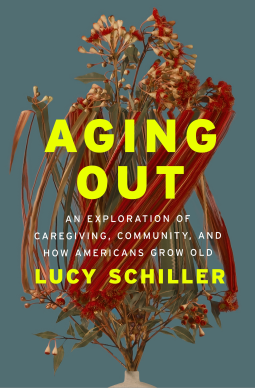
Aging Out
An Exploration of Caregiving, Community, and How Americans Grow Old
This title was previously available on NetGalley and is now archived.
Send NetGalley books directly to your Kindle or Kindle app
1
To read on a Kindle or Kindle app, please add kindle@netgalley.com as an approved email address to receive files in your Amazon account. Click here for step-by-step instructions.
2
Also find your Kindle email address within your Amazon account, and enter it here.
Pub Date Jul 14 2026 | Archive Date Aug 13 2026
Description
Part of the New York Times’ "Nonfiction Everyone Will Be Reading This Summer"
One of LA Times' "10 Books to Read in July"
An Amazon Editors’ "Best Nonfiction of July" pick
A profoundly personal investigation into the current state of eldercare and what it means to grow old in America
"Schiller unpacks a complicated subject with curiosity and empathy...[A] deeply human portrayal of what it means to get older in a society unprepared to care for its most vulnerable."—Publishers Weekly
Unlike many other cultures, our collective stance toward older people in the United States has long been one of casual avoidance and neglect. This attitude became brutally clear during the height of the COVID pandemic, when too many people saw elderly deaths not as tragedies but as foregone conclusions.
Like many of us, Lucy Schiller experienced this callousness firsthand when her grandmother passed away during the pandemic. In the wake of this trauma, propelled by equal parts grief and curiosity about her own fear of aging, Schiller embarked on an investigative journey to understand why the prospect of aging is so frightening and how being “old” in America intersects with class, race, disability, and public policy.
From profit-driven networks of care facilities to systemic failures in economic support, the future of older Americans looks increasingly uncertain. In Aging Out, Schiller reports this crisis, sharing the human toll of inadequate housing, health care, and community, while simultaneously excavating her own complicated relationship with aging.
Combining the incisive reporting of Evicted with the beautifully rendered introspection of The Empathy Exams, Aging Out is an intimate and unflinching exploration of what it means to age in this country and why Americans—including Schiller herself—are so terrified of getting old.
Available Editions
| EDITION | Other Format |
| ISBN | 9781250344526 |
| PRICE | $29.99 (USD) |
| PAGES | 304 |
Available on NetGalley
Available to Buy
Buy on BN.com Buy on Bookshop.orgAverage rating from 23 members
Featured Reviews
 Karen E, Reviewer
This is a beautiful and moving book. So relatable in its grappling with the death of and grief over an elderly loved one due to Covid, and the complete disorientation that came with such deaths.
In the first chapter, Schiller says:
“Because when you think of old people dying, you do not picture them dying by accident, in pain, screaming. *Age* looses them from that vision of death. Old age excuses us from understanding potential pain; regardless of the listed cause of death, old age is both their fundamental killer and their salvation. In our imaginations, anyway, the old generally do not die in agony; oldness supposedly allows a person to slip off the last few things that were keeping them here and greet death as an expected guest. I still can’t totally convey how *wrong* these visions are, at least in the case of my grandmother. She was not, I wanted to say, the ‘type’ of old person to be close to death already, any more than the rest of us are.”
Yes, yes, yes to this, especially as it echoes my own experience with my parents, who were in their mid/late eighties when they got Covid.
In a later chapter, Schiller adds:
“In the gap between my grandmother’s death by Covid and ‘normal’ death, I became unsure of how to think of what had happened. I could not tell if her death had been natural or unnatural. This was the murky question I was preoccupied by. If I could answer that question, I felt, I could figure out how to grieve, or maybe more precisely, how to file away this piece of personal history. It would become sharper, and I would know what objective heading to use. ‘I didn’t know how to hold a grief so vast,’ writes Meg Bernhard, of her own grandfather’s Covid death, and the way it sat inside of a much larger landscape of loss.”
Covid did not immediately kill my parents, but it set into motion steep, steady declines, all traceable to the virus. As Schiller’s experience did, mine led me into the labyrinth of American care for the aging — assisted living, memory care, nursing homes, hospitals. It was a baffling construct to navigate, one that often left me (and my parents) in tears.
This book felt personal to me, and sometimes gut-wrenching, but I don’t think one has to have experienced the broken system in the U.S. to appreciate the narrative or benefit from this book. AGING OUT is a beautifully written, compassionate, wise look at a country, a situation, and a group of people (which I guess I now belong to, at age 66…?) that none of us seem to have figured out.
Readers who liked this book also liked:

We Are Bookish
Multicultural Interest, Mystery & Thrillers, Teens & YA





Jane Green
General Fiction (Adult), New Adult, Women's Fiction