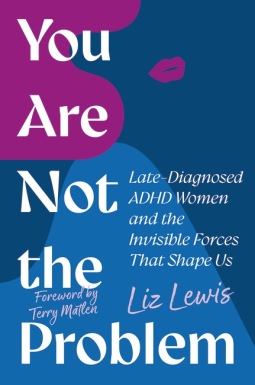
You Are Not the Problem
Late-Diagnosed ADHD Women and the Invisible Forces That Shape Us
This title was previously available on NetGalley and is now archived.
Send NetGalley books directly to your Kindle or Kindle app
1
To read on a Kindle or Kindle app, please add kindle@netgalley.com as an approved email address to receive files in your Amazon account. Click here for step-by-step instructions.
2
Also find your Kindle email address within your Amazon account, and enter it here.
Pub Date Jun 18 2026 | Archive Date Jun 18 2026
Talking about this book? Use #YouAreNottheProblem #NetGalley. More hashtag tips!
Description
I want you to remember you are not the problem.
ADHD in women is still widely misunderstood which often makes navigating the world as an ADHD woman exhausting and filled with shame. Why do I find things so challenging that other women do with ease? Why can't I get anywhere on time?
Drawing on her professional experience within the ADHD community as well as her work with late-diagnosed ADHD women, Liz Lewis is here to put these anxieties to rest. She reveals the hidden costs of masking and Rejection Sensitive Dysphoria, navigating relationships and motherhood, and the impossible "Triple Bind" that demands women excel in all domains while appearing effortlessly perfect.
Using stories, science, cultural analysis and humour to examine the influence of ADHD, this book can help you question the beliefs and expectations that have hindered you and encourage you reclaim space. This isn't a manual for "fixing" yourself - it's a roadmap for understanding your neurological differences with compassion.
Available Editions
| EDITION | Other Format |
| ISBN | 9781839977947 |
| PRICE | £14.99 (GBP) |
| PAGES | 224 |
Available on NetGalley
Available to Buy
Buy on Amazon Buy on BN.com Buy on Bookshop.orgAverage rating from 40 members
Featured Reviews
 Kelly P, Reviewer
I love that this ADHD book for women has a title that tells the reader everything! I have been curious about ADHD, and just knowing I’m not alone, and it’s not a problem I have to navigate by myself, is reassuring. I enjoyed how Lewis structured the book, incorporating stories and science. Thanks to NetGalley for the ARC.
 Sarah W, Reviewer
Late diagnosed at nearly 40, always wondered why I was so different to others and I used to feel awful at not being able to do the things they could so easily. This book was like a breath of fresh air and helped me understand my condition, thanks to netgalley for this ARC.
 Brandy p, Reviewer
I loved this book. I felt like this book was speaking directly to me. I have been suspecting that I have ADHD and ended up highlighting half the book. I like how the author organized this book and the various subjects that she spoke about. I like that she talked about all types of relationships: workplace, friends, partners, sexual relationships, etc. When she would start each chapter, she gives a summary of what each chapter would be about and then she does the take aways at the end. I felt like this book was very relatable and was written differently then other ADHD for women getting diagnosed as adults.
 Ruth G, Reviewer
You Are Not the Problem is an incredibly validating and compassionate look at ADHD in women, particularly those who are diagnosed later in life. As someone who was diagnosed with ADHD as an adult, much of what Liz Lewis discusses in this book resonated deeply with my own experiences.
Lewis thoughtfully explores many of the challenges that are often overlooked in conversations about ADHD—masking, rejection sensitive dysphoria, and the cultural expectations placed on women to succeed in every area of life while appearing effortlessly put together. The discussion of the “Triple Bind” in particular felt especially insightful and helped frame many of the pressures that ADHD women navigate daily.
One of the most refreshing aspects of this book is that it does not present ADHD as something that needs to be “fixed.” Instead, Lewis focuses on helping readers understand their neurological differences with compassion and context. The blend of personal stories, research, and cultural analysis makes the book both informative and accessible, while maintaining a warm and supportive tone.
For readers who have been diagnosed with ADHD later in life—or who suspect they may be navigating similar challenges—this book offers both validation and perspective. I found it incredibly relatable and encouraging, and I believe it fills an important gap in the current ADHD nonfiction landscape.
Susan A, Educator
This book is a helpful overview of ADHD and how women can be affected, and what women with ADHD should know about the condition. I’ve read a lot of these books but this was the first that acknowledged that not all women are CIS and some NB and Intersex people would also choose woman as their gender. Oftentimes there’s tips for dealing with your husband (when relationships with any spouse, not specifically a husband can struggle) and an assumption you have children. Great to read chapters on perimenopause and menopause as the hormonal influence is still so misunderstood. Great work! Thanks to the author and NetGalley for an eGalley.
Lottie C, Reviewer
4⭐️
Informative book, but I did feel that the information included was rather basic and surface level. I did like the overall message though, and did relate to that a lot
Robin F, Librarian
As a librarian, I have to recommend You Are Not the Problem by Liz Lewis to anyone curious about ADHD in women, especially those diagnosed later in life. This book is a compassionate, eye-opening guide that completely flips the script on the shame so many women feel for “struggling to keep up.”
Lewis combines science, real stories, and cultural insight to explain things like masking, Rejection Sensitive Dysphoria, and the impossible pressures of the “Triple Bind.” What I love most is that it doesn’t try to make you “fix yourself.” Instead, it helps you understand your neurological differences, challenge unrealistic expectations, and reclaim space for yourself—with humor and empathy along the way.
If you’re ready to see ADHD not as a flaw but as part of your unique wiring, this book is a must-read. It’s validating, empowering, and full of insight that stays with you long after the last page.
 Alice G, Reviewer
Thank you to NetGalley and the publisher for providing an early copy of this book in exchange for an honest review.
As a 36-year-old newly diagnosed with ADHD, I found many of the insights in You Are Not the Problem by Liz Lewis really interesting and validating. Lewis explains aspects of ADHD in a way that feels accessible and compassionate, and I particularly appreciated her openness and sense of humour throughout the book. There were moments where I felt completely understood — especially when she talks about the reality that our to-do lists never truly end.
That said, some of the “takeaways” felt a little like common sense or things many people with ADHD may already know. I occasionally found myself wishing the lessons were more than surface level.
I was especially interested in the sections about motherhood. As a relatively new mum navigating ADHD, I would have loved even more exploration of this area. Of course, every experience is different, and no author can perfectly reflect every reader’s situation, but it was the part I found myself most wanting to expand on.
Overall, this is a warm, supportive read that will likely resonate with many people newly exploring an ADHD diagnosis, even if some elements felt familiar.
Recommended for readers who are newly diagnosed with ADHD or looking for a compassionate, relatable introduction to understanding their brains.
 Reviewer 2059534
As a late-diagnosed woman with ADHD, I find my experiences with ADHD almost perfectly encapsulated in this book.
Liz Lewis writes a book tackling ADHD presentation in women and how society’s expectations for women and ADHD intersect. I was ironically listening to a podcast episode about ADHD earlier today (“You, me, and ADHD” on Vox’s Explain It to Me) and many of the topics Liz touches on backs the testimony of the experts consulted by Vox.
I’m not an expert in women, nor ADHD, but having existed with/as both for quite a while, I think I have all the basics down. A lot of this information wasn’t new to me, but I can tell how immensely useful this book would have been when I first got diagnosed/wondered if I had ADHD. This would give any woman new to the world of ADHD the understanding of herself she needs.
As promised, Liz isn’t here to offer advice and tell you how to cope or how to “fix” yourself. That’s refreshing in some way because ironically, it’s so hard to start tasks as someone with ADHD - not putting the tips to use would result in more berating yourself. Her writing is personal with anecdotes, and it feels like she is there with you rather than a detached clinician. I like that it feels more personal.
It helps that a book for those with ADHD is formatted to be more accessible to those with ADHD.
And you know, it feels easier to not be so hard on yourself when you have someone telling you you’re not the problem. It’s easier to know that you’re not alone.
This book was not fully for me as someone who has already listened to/read so much ADHD content, but I learned about the “Triple Blind” and much more about rejection sensitivity dysphoria (it’s so nice to be validated, especially when RSD is often not touched upon) and funnily enough, I was like “dang” when hearing about not being able to tell between months and years - I’ve had that problem all the time but never connected that to time blindness.
I would also recommend the chapters about childbirth and menopause to those who haven’t been through them. It makes me feel better to be prepared. Liz’ goal is to keep the book brief - which makes sense - but I think these chapters could even be expounded upon.
Thank you, NetGalley, and to the publisher for the ARC. Rating 5/5 because this book does what it sets out to do, and it may be something a woman somewhere needs.
 Lauren S, Reviewer
I think this book was just what I needed right now. With a post-school ADHD diagnosis, it can be easy to convince yourself that it's not valid or that you're just not trying hard enough. That's not true! This book was helpful in allowing me to see the things that I did not even consider to be part of my ADHD symptoms, but I now feel confident addressing those issues!
 Lisa B, Reviewer
This is one of the strongest ADHD books for women I’ve read and easily belongs in the same conversation as A Radical Guide for Women with ADHD by Sari Solden and ADHD for Smart Ass Women by Tracey Otsuka.
Liz Lewis goes beyond the usual surface-level discussion of symptoms and masking and gets into something far more important: the consequences of late diagnosis for women. She lays out how ADHD is identified, why that process is more complicated for women, and what happens when it’s missed for years. That alone felt more specific and informative than most books in this space.
What really sets this apart is how it connects research, lived experience, and real-world impact. The sections on emotional fallout and long-term effects of being misunderstood are handled with nuance and clarity, not generalizations. The practical guidance also stands out. It feels realistic and usable, not vague or overly simplified. That’s rare in this category.
Overall, this is well-researched, clearly written, and genuinely useful. Friendly and easy to read while still covering complex material. An easy five stars.
The author's IG provides a lot of additional context. @lizlewisliterary
Reviewer 1394760
Lots of specific topics that are not widely covered, and emphasis on later diagnoses.
For example, the comorbidities are comprehensively covered.
Then menopause, relationship problems, motherhood, brain training, why it may be daunting to manage a house with ADHD etc.
Useful, inclusive and accessible.
Enlightening.
Reviewer 1941544
Good coverage how ADHD symptoms affect all aspects of life of adult women. Lots of reminders to treat yourself with compassion and seek support. The author quotes that women are in a "triple bind" to have a successful career, be a perfect wife and mother, and also look "effortless" at both, which is very unrealistic. Discovering one has ADHD is usually met with either relief, grief and sadness, or desire to "fix oneself", but ADHD can't be "fixed", only managed. The author shares a lot of personal experiences, experiences of people she interviewed and quotes from professionals. An all around useful book.
Reviewer 1351236
This is not exactly a self-help title, more of a mix of the author sharing her experiences, explaining how various aspects of life are affected by adhd (it's not just you being lazy, scatter-brained or uncaring!) and validating women's impossible struggle to stay perfect - in workplace, relationships, parenting, housekeeping, appearance, and many other aspects.
It's more of an explanation (did you know struggling with maintaining hygiene could be caused by adhd and sensory issues?) and pep-talk (stop trying to make yourself "not a problem" and accommodate everyone at your own expense, you deserve accommodations too!), with fairly light actionable advice.
It's useful to anyone who can't get a diagnosis and wants a thorough overview how adhd can influence various aspects of adult life for women.
Wish that it was either more memoir, or more self-help in nature.
Also I don't appreciate asexual erasure by saying the difference between romantic relationships and friendship is defined by the presence of sex.
Thank you Netgalley and Jessica Kingsley Publishers for the ARC.
Reviewer 1541287
4.5/5 Stars
You Are Not the Problem is a thoughtful and validating read, especially for those diagnosed with ADHD later in life. It speaks directly to the experience of navigating denial and self-doubt, while offering a refreshing reminder that struggling doesn’t simply mean you need to try harder.
Blending research with lived experience, the book strikes a balance between informative and deeply relatable. It avoids the typical self-help tone, instead feeling more like a conversation with a knowledgeable friend.
While some readers may wish for more actionable strategies, the book’s strength lies in its ability to foster understanding and self-compassion. It’s a meaningful resource for women looking to better understand how their minds work and to approach themselves with more patience and grace.
ashley m, Reviewer
This felt validating without slipping into empty positivity.
A lot of the book focuses on patterns—especially the ways people internalize blame in unhealthy environments—and the explanations feel compassionate but still practical. I appreciated that it encourages reflection without sounding judgmental or overly clinical.
The kind of book that probably resonates differently depending on where you are in your life.
Charlene W, Reviewer
Firstly a big thank you for my opportunity to read and review this book .
This was a great informative and insightful read on a personal level but also academically.
Written in an easy to process and digest format this is relatable and prevalent in a society that’s awakening to the fact that women have adhd and how it manifests differently to men .
Reviewer 1491639
this was really great to read. i think it could help both non ND and neurotypical people. ithink so many people who are diognised could seek great comfort in the words written here. the answers to so many moments in their lives, the answers to why they cant or can do certain things and even little tips on what to do next.
mostly even if you already know this is you or your family member i think the "im seen!" aha moments is worth this books alone. its written as if someone who cares for each and every reader is writing to them with fantastic compassion. so you might already know the facts, symptoms and even effect ND has on life. but even then this book is just that little compassionate reminder that you are seen, this isn't a problem or a problem with you. its all explained. brains work differently.
certain parts to this book i think will definitely make those with ND feel quite emotional .to be seen, this is me, this is how i feel like i do, do what i do, act and think like i do. and there is nothing more comforting and validating than that. i actually think a book like this would be useful for all. something like this somehow done as a collective even part of school syllabus where we might learn about disorders, mental illness and health and ND. because i think this would or should definitely create alot of compassion, care and doing things differently when faced with someone with ND. because if anyone can read this book and not ache for when their ND hurts them or the world around them hurts because of their ND needs to give their heads a wobble.
for family too. it feels like it could be "yup, this is why *** does such a thing. so now we know that lets lower this tone, argument or ourselves down a notch and explore how we might do different, think different or even simply being aware. we dont look at someone with a broken leg and say stop limping, dont use crutches, walk those stairs jumping each step that will harm you. because we KNOW and often SEE the issue at hand. well this is ND people and their brains, emotions and way they do things or dont do things. and once you know, once you see you give them their crutches, time, or a little more patient kindness.
the layout for me felt like it could be or ND too where the pages and layouts of things are equally important.
this book for me was just so good because it really did focus on the mental health and minds of those with ND and how what they think, feel and do with their ND can makes them feel. and its offers a hand of care to say "no blame, no shame here."
a brilliant book all round and even i who've lived alongside this for decades now found little bits of comforts and refreshed my mind in how i can still learn, stop and even help going forward.
so much of the upset around ND, infact id say pretty much all comes from how the rest of the world is made, reacted and talked to ND people. why would we ever wish to not learn more. or why would we ever want someone to feel worse about themselves? its up to us, so much us to create a safe space.
Reviewer 2086482
Thought provoking and reflective. Some interesting observations here and shared experiences are helpful for this kind of book.
 Barbara B, Book Trade Professional
Liz Lewis wrote "You Are Not the Problem" to speak to women diagnosed with ADHD. Her refreshing approach does not offer hacks, workarounds, or solutions, but rather fully illustrates the obstacles and expectations in neurotypical society that most impact those women. I do not have ADHD, although I have many friends, colleagues, and clients who do. I found Lewis's book informative and insightful to understanding the challenges these women face on a daily basis.
I can imagine someone who does have ADHD will both feel seen and gain insight as to why they are impacted so intensely by the world around them.
Thank you to NetGalley and Jessica Kingsley Publishers for providing an ARC in exchange for an honest review. All opinions are my own.
#netgalley #youarenottheproblem
Tabitha K, Bookseller
I appreciate this book's tone and information very much, and how the author admits it is definitely not a self-help book. Instead, she calls on years of personal experience, thousands of interviews, and professional studies to explain the nuances of how ADHD affects women- especially those diagnosed later in life. She is gentle, but firm in assuring the reader that American gender expectations oftem cause more self doubt and higher masking, which can worsen symptoms at times of hormonal shifts, like puberty and menopause. Reading this felt affirming and comforting- a recognition of our commonly shared struggles, and assurance that the only "fixing" that needs done is to remove the guilt and shame from being ourselves.
Reviewer 2106613
Thank you to the publisher and NetGalley for providing an advance copy in exchange for an honest review.
I thoroughly enjoyed this book and found it both informative and thought-provoking. One of its greatest strengths was the way it explored the many ways ADHD can present in women, particularly those whose symptoms have been overlooked, misunderstood, or masked for years.
I especially appreciated the discussion around the intersection of biology, gender expectations, and lived experience. The authors explored not only how ADHD symptoms may present differently in women, but also how societal expectations can influence coping strategies, self-perception, relationships, and the likelihood of receiving a diagnosis.
The book struck a good balance between research, personal stories, and practical insights. I found the examples particularly effective in bringing concepts to life and illustrating how ADHD can impact everyday experiences in ways that are not always immediately recognised.
The writing was approachable and engaging throughout, making complex ideas easy to understand without oversimplifying them. While there were a few points that felt somewhat repetitive, overall I found this to be a thoughtful and nuanced exploration of ADHD in women that offered both understanding and valuable insight.
Reviewer 1384601
As a woman who was diagnosed with ADHD late in life... this book felt like home, honestly. I loved it and i feel so seen + validated. Recommending to all my fellow ADHD girlies.
Reviewer 1288394
This one doesn't read like a typical ADHD self-help book, which is exactly what makes it work. Lewis isn't offering hacks or productivity systems. Instead she looks at why ADHD is so particularly hard for women, the masking, the shame, the impossible expectations, the late diagnoses, and makes the case that the problem was never you to begin with.
The sections on relationships, work, and the emotional fallout of going undiagnosed for years are specific and grounded in a way that a lot of books in this space aren't. It reads more like a conversation than a clinical guide, which I found easier to sit with.
Some readers may want more actionable takeaways, and a few sections stay at surface level. But if you've spent years wondering why everything feels harder for you than it seems to for everyone else, this book offers language for that experience that's genuinely hard to find.
Thanks to NetGalley and Jessica Kingsley Publishers for the ARC in exchange for an honest review.
Readers who liked this book also liked:



Molly Ni Chéileachair
Comics, Graphic Novels, Manga, Mystery & Thrillers, Romance






Lexi Davis
General Fiction (Adult), New Adult, Romance