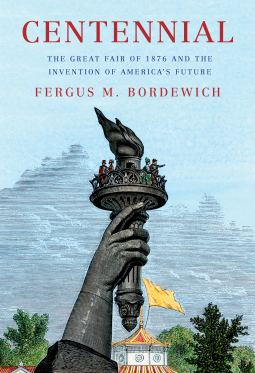
Centennial
The Great Fair of 1876 and the Invention of America's Future
This title was previously available on NetGalley and is now archived.
Send NetGalley books directly to your Kindle or Kindle app
1
To read on a Kindle or Kindle app, please add kindle@netgalley.com as an approved email address to receive files in your Amazon account. Click here for step-by-step instructions.
2
Also find your Kindle email address within your Amazon account, and enter it here.
Pub Date Jun 9 2026 | Archive Date Jul 9 2026
Talking about this book? Use #Centennial #NetGalley. More hashtag tips!
Description
“Those who were there felt that the wheel of history itself had turned before their eyes.”
Held at Fairmount Park, in Philadelphia, the Great Centennial Exhibition of 1876 attracted 10 million Americans—nearly 20 percent of the population, among them P. T. Barnum, Frederick Douglass, and Mark Twain—and visitors from around the world, including the emperor of Brazil, Dom Pedro (who couldn’t get enough of the exhibition). On display were inventions that signaled the changing landscape of American life, from the typewriter to the telephone to Heinz Tomato Ketchup.
This celebration of America’s first century came at a moment when its future seemed more precarious than ever—as big money threatened to overwhelm the government, underpaid workers waged the first national labor strike, feminists demanded rights for women, Native tribes went to war to repel the advancing settlement in the West, and Black Americans struggled to exercise their hard-won freedom. Looming over the fair was the presidential race of 1876—a highly contested election that would determine the fate of Reconstruction and permanently shape the Republican party as we know it today.
Fergus Bordewich animates these converging crises through the lives of four protagonists—Rutherford B. Hayes, Alexander Graham Bell, railroad magnate Tom Scott, and sculptor Edmonia Lewis—revealing a country striving to live up to the promise of its founders while bracing for the tidal wave of the twentieth century.
Available Editions
| EDITION | Other Format |
| ISBN | 9780593803363 |
| PRICE | $35.00 (USD) |
| PAGES | 272 |
Available on NetGalley
Available to Buy
Buy on Amazon Buy on BN.com Buy on Bookshop.orgAverage rating from 10 members
Featured Reviews
 Nancy A. B, Reviewer
In 1974 we moved to the Philadelphia area. We have fond memories of the excitement and activities surrounding the Bicentennial. We also learned about the Centennial Fair and told Memorial Hall was all that remained. Since then, I have read how exhibits at the fair influenced culture and art. Bordewich’s book took me deep into the political and social turmoil behind the event meant to unite the country.
This book began as the story of the greatest event of America’s Gilded Age, the spectacular Centennial Exhibition of 1876, an extravaganza concocted to celebrate the nation’s first century. It quickly grew beyond the fair’s confines to become a book about America itself. from Centennial by Fergus M. Bordewich
It is a story of “winners and losers in the great American struggle for survival and success” in politics and society. It was a time of technological innovations that would soon change the world.
This history reminds that our country has always been a work in progress, with all the turmoil and conflict that entails.
Thanks to Knopf for a free book.
Readers who liked this book also liked:
Edited by Atlas Obscura, Doug Baldinger, and Louise Story
History, Reference, Travel