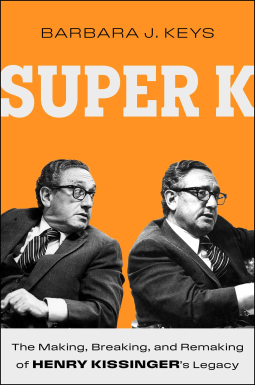
Super K
The Making, Breaking, and Remaking of Henry Kissinger's Legacy
Sign In or Register Now to see if this title is available for request.
Buy on BN.com Buy on Bookshop.orgSend NetGalley books directly to your Kindle or Kindle app
1
To read on a Kindle or Kindle app, please add kindle@netgalley.com as an approved email address to receive files in your Amazon account. Click here for step-by-step instructions.
2
Also find your Kindle email address within your Amazon account, and enter it here.
Pub Date Nov 17 2026 | Archive Date Nov 24 2026
Description
The untold story of how Henry Kissinger spent five decades building and protecting a legacy that continues to influence modern politics—and the institutions that helped him do it.
In the nearly fifty years after he left public office, Henry Kissinger remained one of the most admired—and controversial—figures in American public life. Super K reveals how he manufactured this extraordinary fame. Drawing on previously unseen private correspondence and interviews with journalists and editors he courted and battled, historian Barbara J. Keys exposes the machinery Kissinger used to build and defend his reputation.
From fierce battles over his record in Cambodia and Chile to high-stakes confrontations with television networks and major publishers, Kissinger spent nearly five decades shaping how the world remembered his eight years in power and leveraging those years into continuing influence. In the process, he helped write the playbook for the modern political celebrity.
Super K is not just a portrait of one man’s quest to shape history; it is a sweeping account of the media and elite institutions that enabled him, revealing vulnerabilities that still shape public and political life today. Insightful and deeply researched, this is a definitive look at how reputations are manufactured and why they matter.
Available Editions
| EDITION | Other Format |
| ISBN | 9781668018927 |
| PRICE | $30.00 (USD) |
| PAGES | 320 |
Available on NetGalley
Available to Buy
Buy on BN.com Buy on Bookshop.orgAverage rating from 6 members
Featured Reviews
 Brandon W, Educator
With so many books about Kissinger, how could anything more be insightful in such a short amount of time? Barbara Keys' book provides a look at Kissinger that historians and scholars often discuss but no one has written extensively about. Keys' book is more than just about how Kissinger is seen, it's about how people try to chisel out a legacy for themselves. There is so much controversy about Kissinger, with people along a spectrum seeing him as an American hero to an American villain. The merits of to these arguments have been discussed many places, but no one has done the job, until this book, of looking at just how one of America's most strategic and calculated policymakers worked to define himself. Presidents try to leave a mark with a library and museum, or write memoirs (Kissinger wrote several recollections of his time in government). But how do you leave a mark about your decisions? How do you try and craft the narrative? Kissinger did it through interviews, writings, and speaking. He did it with his last few years by looking to speculation about the future of international conflict and AI.
Keys doesn't shy away from any topics. I had always been curious about what Kissinger had to say about Cambodia in the subsequent years; I found that chapter to be the most insightful, including the story of his interview with David Frost. While no one can fully control the dialogue around themselves, Kissinger worked to try and make the record show where he stood, what he thought, and why he did what he did. Being critically aware of how people, both living and dead, have done this, can provide more insight into their thinking and views about themselves (arrogance, perhaps). And maybe, in the end, to be someone who needs to shape their own legacy, as Kissinger did, says something about that person as well.
 Reviewer 1870399
Thank you, Simon & Schuster, for providing this book for a voluntary review via NetGalley. All opinions are my own.
In Super K Barbara J. Keys provides an eye-opening read that pulls back the curtain on the mystique and celebrity of Henry Kissinger, the revered American diplomat who served as the 7th national security advisor from 1969 to 1975 and as the 56th United States secretary of state from 1973 to 1977, serving under presidents Richard Nixon and Gerald Ford. Keys describes how Kissinger carefully managed his reputation and legacy while he was in office and after he left office. Keys called these efforts “perhaps the most sustained, sophisticated, and successful reputation management campaign [through the enlistment of the foreign policy establishment, elite universities, wealthy donors, and hand-picked biographers] in modern American political history. It was proof that in public life, controlling the narrative matters as much as controlling events, and that the stories we tell about power shape power itself.”
Kissinger saw the publication of his memoirs – consisting of three volumes: White House Years (1979), Years of Upheaval (1982), Years of Renewal (1999) – as an opportunity to shape his legacy. As with any public figure, Kissinger experienced criticism and challenges to his integrity, especially around the policies he established related to Vietnam, Chile, and Cambodia. When this happened, Kissinger reacted strongly and did everything he could to control the narrative. Keys describes the highly publicized, contentious interviews with David Frost and 60 Minutes and the resultant public backlash. Keys also discusses the publication of books by Seymour Hersh (The Price of Power: Kissinger in the Nixon White House) and Christopher Hitchens (The Trial of Henry Kissinger), which exposed coverups and potential war crimes committed by Henry Kissinger.
Kissinger sought out several prominent authors to write an “authorized” biography, where he offered special access to private papers and diaries and permission to speak with friends and family, but ceded formal editorial control to the author. He chose Niall Ferguson, who completed volume one of the authorized biography in 2015 and is currently working on volume two (no announced publication date) covering Kissinger’s years in the Nixon and Ford administrations.
I’ve read several books on Kissinger, so I was riveted by the disclosures Keys presented in Special K and got through the book in 3 sittings. Keys closes the book discussing the parallels between Henry Kissinger and Donald Trump in how they manage their public image and reputations and gain political power. She notes that “controlling the narrative matters as much as controlling events, and that the stories we tell about power shape power itself. . . . As the public began to see the media as a tool for those in power rather than an independent force for impartial judgment, an essential pillar of democratic society began to crumble. The media’s role as the ‘fourth estate,’ holding those in power accountable to the public and ensuring transparency, is critical to democratic functioning.”
I recommend Special K to anyone with an interest in Henry Kissinger and the lengths he went to maintain his public image and legacy throughout his life. Special K also left me with an appreciation of the intrepid journalists, such as Seymour Hersh and Christopher Hitchens, who risk their careers in exposing corruption and speaking truth to power.
Readers who liked this book also liked:


Paul S. Rothenberg
Biographies & Memoirs, Entertainment & Pop Culture

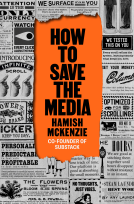
Hamish McKenzie
Business, Leadership, Finance, Nonfiction (Adult), Professional & Technical

Judi Dench; Brendan O'Hea
Biographies & Memoirs, Nonfiction (Adult)
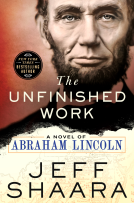
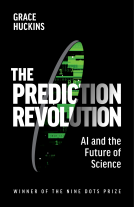
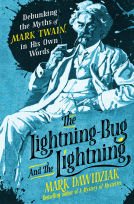
Mark Dawidziak
Biographies & Memoirs, History, Nonfiction (Adult)