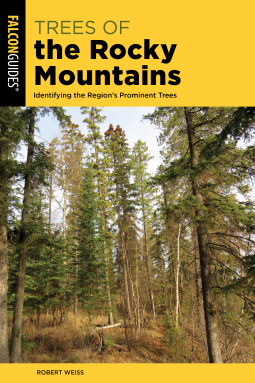
Trees of the Rocky Mountains
Identifying the Region's Prominent Trees
This title was previously available on NetGalley and is now archived.
Send NetGalley books directly to your Kindle or Kindle app
1
To read on a Kindle or Kindle app, please add kindle@netgalley.com as an approved email address to receive files in your Amazon account. Click here for step-by-step instructions.
2
Also find your Kindle email address within your Amazon account, and enter it here.
Pub Date Jun 17 2025 | Archive Date Jun 21 2025
The Globe Pequot Publishing Group, Inc. | Falcon Guides
Talking about this book? Use #TreesoftheRockyMountains #NetGalley. More hashtag tips!
Description
Trees of the Rocky Mountains provides readers with a dedicated guidebook to identifying the most prominent tree species occurring in the Rocky Mountain region of North America. This guide will cover a selection of the most prominent native and naturalized tree species of the iconic Rocky Mountain region spanning Colorado, Wyoming, Montana, New Mexico, Utah, and Idaho.
Each species has a full description detailing shape and form, physical characteristics, habitat, wildlife uses, and information on identifying potential signs of disease and damage. Each species entry also includes multiple photographs, detailing the tree’s bark, needles or leaves, seeds or pinecones, and overall appearance.
Available Editions
| EDITION | Other Format |
| ISBN | 9781493086528 |
| PRICE | $24.95 (USD) |
| PAGES | 200 |
Available on NetGalley
Available to Buy
Buy on Amazon Buy on BN.com Buy on Bookshop.orgAverage rating from 6 members
Readers who liked this book also liked:


Chris Oxlade, Anita Ganeri, Mike Love
Children's Nonfiction, History, Science









Catholic Bible Press
Christian, Religion & Spirituality, Self-Help