Please wait... This may take a moment.
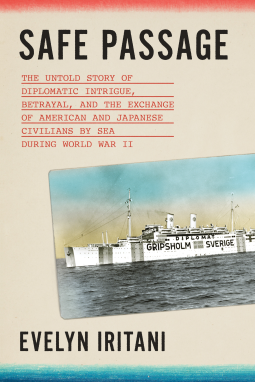
Safe Passage
The Untold Story of Diplomatic Intrigue, Betrayal, and the Exchange of American and Japanese Civilians by Sea During World War II
This title was previously available on NetGalley and is now archived.
Pub Date
Mar 10 2026
| Archive Date
Apr 10 2026
Description
An untold story of idealism, betrayal, and behind-the-scenes American–Japanese contacts in World War II.
In the fall of 1943, during some of the Pacific theater’s bloodiest battles, the United States and Japan pulled off a diplomatic coup—the exchange of civilians caught on the wrong side of the battlefield after Pearl Harbor. Nearly fifteen hundred Allied civilians trapped in Asia, mostly Americans, sailed through dangerous waters to an Indian port city where they were traded for an equivalent number of Japanese immigrants and their families sent from the Americas. The fate of the more than ten thousand Americans left behind rested on the success of this endeavor.
In Safe Passage, the award-winning journalist Evelyn Iritani reveals the herculean efforts of the American diplomat James Keeley to engineer these wartime exchanges despite great resistance from within and outside his government; the shipboard conflicts among passengers, including missionaries, revelers, and sharp-tongued journalists; and the moral compromises involved in securing their safe passage. Faced with too few bodies to trade and desperate to free Americans from perilous conditions, the United States uprooted and repatriated Japanese citizens of Latin America, sometimes against their will, while Japanese imprisoned in camps, many of them American citizens, were forced to choose between expulsion to a war zone or an uncertain future behind barbed wire. The result is a revelatory account of the hurdles to pursuing humanitarian action in wartime.
An untold story of idealism, betrayal, and behind-the-scenes American–Japanese contacts in World War II.
In the fall of 1943, during some of the Pacific theater’s bloodiest battles, the United States...
Description
An untold story of idealism, betrayal, and behind-the-scenes American–Japanese contacts in World War II.
In the fall of 1943, during some of the Pacific theater’s bloodiest battles, the United States and Japan pulled off a diplomatic coup—the exchange of civilians caught on the wrong side of the battlefield after Pearl Harbor. Nearly fifteen hundred Allied civilians trapped in Asia, mostly Americans, sailed through dangerous waters to an Indian port city where they were traded for an equivalent number of Japanese immigrants and their families sent from the Americas. The fate of the more than ten thousand Americans left behind rested on the success of this endeavor.
In Safe Passage, the award-winning journalist Evelyn Iritani reveals the herculean efforts of the American diplomat James Keeley to engineer these wartime exchanges despite great resistance from within and outside his government; the shipboard conflicts among passengers, including missionaries, revelers, and sharp-tongued journalists; and the moral compromises involved in securing their safe passage. Faced with too few bodies to trade and desperate to free Americans from perilous conditions, the United States uprooted and repatriated Japanese citizens of Latin America, sometimes against their will, while Japanese imprisoned in camps, many of them American citizens, were forced to choose between expulsion to a war zone or an uncertain future behind barbed wire. The result is a revelatory account of the hurdles to pursuing humanitarian action in wartime.
A Note From the Publisher
Evelyn Iritani is the author of An Ocean Between Us: The Changing Relationship of Japan and the United States Told in Four Stories from the Life of an American Town. She is a former reporter for the Seattle Post-Intelligencer and the Los Angeles Times, where her reporting garnered numerous awards, including the 2004 Pulitzer Prize for National Reporting for a series she coauthored on Wal-Mart.
Evelyn Iritani is the author of An Ocean Between Us: The Changing Relationship of Japan and the United States Told in Four Stories from the Life of an American Town. She is a former reporter for the...
A Note From the Publisher
Evelyn Iritani is the author of An Ocean Between Us: The Changing Relationship of Japan and the United States Told in Four Stories from the Life of an American Town. She is a former reporter for the Seattle Post-Intelligencer and the Los Angeles Times, where her reporting garnered numerous awards, including the 2004 Pulitzer Prize for National Reporting for a series she coauthored on Wal-Mart.
Available Editions
| EDITION |
Other Format |
| ISBN |
9780374261078 |
| PRICE |
$33.00 (USD)
|
| PAGES |
464
|
Available on NetGalley
NetGalley Reader
(EPUB)
NetGalley Shelf App
(EPUB)
Send to Kindle (EPUB)
Send to Kobo (EPUB)
Download (EPUB)
Additional Information
Available Editions
| EDITION |
Other Format |
| ISBN |
9780374261078 |
| PRICE |
$33.00 (USD)
|
| PAGES |
464
|
Available on NetGalley
NetGalley Reader
(EPUB)
NetGalley Shelf App
(EPUB)
Send to Kindle (EPUB)
Send to Kobo (EPUB)
Download (EPUB)
Average rating from 7 members
Featured Reviews
 Rosemary H, Reviewer
4 stars
4 stars
4 stars
4 stars
4 stars
This book is testament to the importance of considering both the macro and micro aspects of history. As I read more, I learn more about the impact of wars on so many more than the military. This book contains the stories of numerous individuals involved in the trading of Japanese and Americans in World War Two. There are stories of military prisoners of war, missionaries, business people and children. I had no appreciation that Japanese immigrants to Peru were included in the trade by the US. This story also tells us about the continued racism throughout the world.
I wasn't sure about the premise of this book initially but found it fascinating when reading it. Each chapter tells the story of an individual at different stages over the period. The American born Japanese teenage forced to repatriate to Japan despite not speaking the language or having any real identification with it, the charismatic American journalist living in Hong Kong, the eccentric American teaching English at a school in Japan, a diplomat involved in managing the prisoner exchange and the challenges involved. It also made me consider the global world before digitalisation and the speed of communication.
The book is engaging and provocative in encouraging the reader to think how often the "other" is often and easily discriminated against. It recognises that there were appalling actions taken by all sides in the conflict and maintains a balanced narrative.
I was given a complimentary copy of this book in return for an fair review.
4 stars
4 stars
4 stars
4 stars
4 stars
Featured Reviews
Rosemary H, Reviewer
4 stars
4 stars
4 stars
4 stars
4 stars
This book is testament to the importance of considering both the macro and micro aspects of history. As I read more, I learn more about the impact of wars on so many more than the military. This book contains the stories of numerous individuals involved in the trading of Japanese and Americans in World War Two. There are stories of military prisoners of war, missionaries, business people and children. I had no appreciation that Japanese immigrants to Peru were included in the trade by the US. This story also tells us about the continued racism throughout the world.
I wasn't sure about the premise of this book initially but found it fascinating when reading it. Each chapter tells the story of an individual at different stages over the period. The American born Japanese teenage forced to repatriate to Japan despite not speaking the language or having any real identification with it, the charismatic American journalist living in Hong Kong, the eccentric American teaching English at a school in Japan, a diplomat involved in managing the prisoner exchange and the challenges involved. It also made me consider the global world before digitalisation and the speed of communication.
The book is engaging and provocative in encouraging the reader to think how often the "other" is often and easily discriminated against. It recognises that there were appalling actions taken by all sides in the conflict and maintains a balanced narrative.
I was given a complimentary copy of this book in return for an fair review.
4 stars
4 stars
4 stars
4 stars
4 stars
Readers who liked this book also liked:
WONDERLAND
Patricia Knight Meyer
Biographies & Memoirs, Nonfiction (Adult), True Crime
Every Given Day
Cathy Gohlke
Christian, General Fiction (Adult), Historical Fiction
The Intrigue
Silvia Moreno-Garcia
General Fiction (Adult), Historical Fiction, Mystery & Thrillers
Milkteeth
Caitlin Starling
General Fiction (Adult), Horror
Lethal Kiss
Taylor Grothe
General Fiction (Adult), Horror, Romance
Forged in FIYAH
Edited by DaVaun Sanders
Multicultural Interest, Sci Fi & Fantasy
Spoke
Kat Leyh
Comics, Graphic Novels, Manga