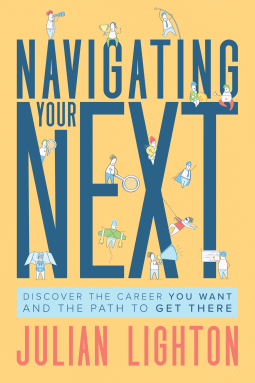
Navigating Your Next
Discover the Career You Want and the Path to Get There
This title was previously available on NetGalley and is now archived.
Send NetGalley books directly to your Kindle or Kindle app
1
To read on a Kindle or Kindle app, please add kindle@netgalley.com as an approved email address to receive files in your Amazon account. Click here for step-by-step instructions.
2
Also find your Kindle email address within your Amazon account, and enter it here.
Pub Date Apr 28 2026 | Archive Date Apr 30 2026
Talking about this book? Use #NavigatingYourNext #NetGalley. More hashtag tips!
Description
Find the clarity, confidence, and direction you’ve been missing.
The most important career question you can ask yourself is ‘What do I want?’. When your career no longer fits—or you’re unsure what success even looks like—it’s easy to feel stuck. Navigating Your Next offers a practical, proven road map to help you move forward with clarity. Whether you’re launching your career, navigating midlife change, or redefining your goals after reaching the top, this guide helps you uncover what matters most and how to pursue it.
Drawing from decades of real world experience and more than 500 coaching engagements, Julian Lighton delivers a seven-step framework to help you know what you want, define your value, activate your network, and pursue meaningful work with confidence.
With the right mindset and strategy, you can design a future that reflects your purpose—and take the next step with certainty.
Advance Praise
"Like a Taylor Swift album, Navigating Your Next unfolds in a series of familiar moments leading you to realizations about yourself and your career, providing clarity about what you want and motivation to get it. A work of real craft and insight.”
― Nick Mehta
President & CEO, Gainsight; Board Director, F5 and Pubmatic (Nasdaq)
“In a world obsessed with speed and achievement, Navigating Your Next reminds us that real success begins with self-awareness. Julian Lighton weaves together insight, strategy, and humanity to help people move from confusion to clarity―and from career success to personal fulfillment.”
― Debi Hemmeter
Cofounder, LEAN IN; President, Inner Mountain Foundation
“At every stage of his own journey, Julian has taken the opportunity to successfully reinvent himself, setting new goals and accepting new challenges. And he has done this while remaining curious, direct, and open―and always brimming with positive energy. I can think of no better guide to navigate your next career move.”
― Paul McNabb
Managing Partner, Episode One Ventures, UK
“This is the book I wish I’d read at twenty-five. To have Julian in my corner would have been invaluable, and I highly recommend his wise and entertaining words to anyone contemplating their next step.
― Nicky Sargent
Former CEO & Chairwoman, The Farm Group (WPP); BAFTA Award Winner
"A refreshingly smart, practical, and inspiring guide to career change. Packed with real-world exercises and tools, this book turns ambition into achievable action. Kudos to Julian for writing the best and most useful book on careers I have ever read."
― David Kuizenga
Chief Financial Officer, Common Sense Media
Available Editions
| EDITION | Hardcover |
| ISBN | 9798891881983 |
| PRICE | $34.95 (USD) |
| PAGES | 384 |
Available on NetGalley
Available to Buy
Buy on Amazon Buy on BN.com Buy on Bookshop.orgAverage rating from 7 members
Featured Reviews
 Demetris P, Reviewer
The Map, the Mirror, and the Life You Forgot to Choose
“Navigating Your Next” turns career change into an inquiry into recognition, asking not only where work should take us, but whether the self arriving there is finally our own.
By Demetris Papadimitropoulos | April 19th, 2026
One of the quieter ways to misbuild a life is to become very good at the wrong strength.
Not bad at it, not incompetent, not visibly failing in the dramatic, résumé-smudging manner, but praised, promoted, paid, and trapped. The talent that once opened the door becomes the room. Then the room starts calling itself a career.
By the time the person inside it notices the air has gone stale, everyone outside is still congratulating them on the view.
Julian Lighton’s “Navigating Your Next” is written for that person: the ambitious professional who has not obviously failed, yet has begun to suspect that success may have been arranged by parents, firms, peers, credentials, markets, or fear. The jacket-copy subject is career navigation, and Lighton does supply the map, the little pencil, and several drawers of backup instruments: worksheets, frameworks, case studies, outreach scripts, negotiation tactics, leadership models, chapter waypoints, appendices, and coaching vocabulary. But the unease under the workbook is not career logistics. It is the problem of being professionally recognized for a self one did not quite choose.
The architecture is deliberately tidy: three parts, seven steps, and a belief that fog becomes less frightening once it has columns. First comes self-inventory through Lighton’s Four Axis Framework: Competency, Context, Culture, and Mindset. What are you good at? Where do you do your best work? Which values and environments steady you, and which quietly distort you? What motivates you, and which of those motives are actually yours? The middle chapters take that private inventory into public weather: roles, industries, locations, employers, networks, interviews, offers. Options are imagined, filtered, narrated, tested, negotiated, measured, and repeated. The final chapters ask whether the thing achieved can be recognized as success, shared with others, celebrated, and eventually translated into leadership.
The sequence is the argument. “Navigating Your Next” is less original in its borrowed tools than in its sequencing. It belongs on the same crowded shelf as Richard N. Bolles’s “What Color Is Your Parachute?,” Bill Burnett and Dave Evans’s “Designing Your Life,” and Herminia Ibarra’s “Working Identity,” but Lighton’s version is more executive-coaching campaign kit than open-ended design-studio exploration. He wants desire turned into evidence, evidence into story, story into access, access into action, and action into a life that does not feel counterfeit once the offer letter arrives. The book is allergic to the makeover fantasy of reinvention. It is interested in the spreadsheet after the epiphany.
Its sharpest hinge is the distinction between progress and progression. Progression is the visible ladder: promotion, title, salary, prestige, board seat, famous employer, impressive business card. Progress is less photogenic: growth, mastery, fit, alignment, resilience, service, connection, and the ability to enjoy what one has become. Lighton returns to this distinction often, and the repetition is purposeful, not merely padded. Many career books smuggle in status while pretending to discuss fulfillment. “Navigating Your Next” gives readers a grammar for noticing when they are moving upward without moving closer to themselves.
Here the book stops behaving like a job-search instrument and starts asking what kind of self the search is meant to serve. Lighton is especially alert to the curse of competence: the misery of being excellent at something one no longer wants to keep doing. The case studies give that point weather. A burned-out management consultant, recently divorced and raising three children, is on the edge of partnership but trapped by fourteen-hour days, weekly travel, perfectionism, parental expectation, competition, status, and the financial architecture of the life she has built. Through Lighton’s framework, she eventually leaves that path and buys a sailboat charter business in the British Virgin Islands. A young accountant, miserable after an MBA and years in a major firm, follows an unlikely but telling clue – his innate sense of smell – into wine training and work as a sommelier. A physician, decorated, solvent, and depleted by overresponsibility, leaves a practice that has consumed him and builds a genomics research group focused on disease diagnosis in wild herds.
Some of these stories have the polished closure of coaching parable. The client reflects, the framework works, the new life appears with suspiciously good lighting. Still, the examples dramatize the guide’s practical wager: dissatisfaction must become more specific before it can become useful. Is the problem the work itself? The scale? The team? The culture? The family expectation? The location? The reward system? The old belief that only a large company can offer security? “I hate my job” may be emotionally accurate and not yet ready for action. Lighton’s gift is turning that groan into categories one can test.
He is particularly good on the difference between possible and probable. His own fantasy of becoming a gentleman sheep farmer is the book’s most charming self-puncture. He imagines rare dark Merino sheep, valuable Pecora Nera wool, mountain land, dogs, solitude, pastoral peace, and a luxury buyer waiting for the fleece. It is possible, in the way many lovely impracticalities are possible if one squints and stands very far away from the mud. But it is not probable. He lacks the competencies, context, livestock knowledge, geographic freedom, and appetite for the daily mud. The example lets longing keep its dignity without handing it the truck keys. A dream may be meaningful even when it is not a plan.
The prose improves whenever Lighton trades the whiteboard marker for something with weight and smell. He is vivid on Muir Beach in 1994, looking toward the Golden Gate Bridge and deciding to leave recessionary London for San Francisco. He is good in the student kitchen, walking past dirty dishes and mentally planning to clean them until the obvious truth arrives: thinking about washing dishes is not washing dishes. He is memorable with the rare black sheep, the rude parrot, the daughter watching “Spy,” the large hairy dogs, the successful classmates who reach reunion age with wealth, power, divorces, separations, and faces that suggest the trophy came without instructions for enjoying it. These moments give the book its grain. They make the abstractions put on shoes.
Elsewhere, the style has consulting-room square corners: efficient, emphatic, and crowded with labels. Lighton writes like a coach with a calendar, a stack of business books, and a low tolerance for fog. His sentences are usually medium-length, direct, and instructional. His diction comes from coaching, consulting, leadership development, product marketing, self-help, sports, and management: competency, context, value proposition, fit, relevance, motivation, execution, stakeholders, metrics, levers, identity, discipline. This language gives the book workbench authority. It also produces stiffness. One does not wander through “Navigating Your Next”; one is ushered, mapped, prompted, assessed, reminded, and occasionally placed in a well-labeled quadrant.
The repetition is both tool and tax. Lighton returns to clarity versus confusion, possible versus probable, progress versus progression, doing versus thinking, journey versus destination. In a workbook, repetition is not automatically a flaw. Coaching often works by returning to the same sentence until the client stops admiring it and does something inconvenient. Still, the book can feel overfurnished. There are seven steps, four axes, six traits, four motivations, three horizons, leadership lenses, team levers, risk assessments, interview phases, network categories, and more named models than one small career crisis can reasonably be expected to host. Lighton rarely lets a good idea travel alone. It usually arrives with a quote, a diagram, an exercise, and a backup framework in the glove compartment.
The citation habit crowds the room in the same way. Lighton draws on ikigai, Daniel H. Pink, Clayton M. Christensen, James Clear, Harvey Coleman, Alex Banayan, Jony Ive, Steve Jobs, Roger Federer, Robin Dunbar, Peter F. Drucker, Bill Campbell, Bruce Tuckman, Richard Hackman, and a crowded chorus of others. Many references are apt. Some feel like credentialing by quotation, as though a useful thought has been asked to bring three chaperones. The book rarely lacks support. At times it lacks the confidence to leave a clean sentence unescorted.
One of Lighton’s smartest acts of restraint is refusing to begin with tactics. Résumé work, LinkedIn polishing, cover letters, outreach, and negotiation all wait until after the slower self-inventory. This is not just sequencing; it is an ethics of method. Do not optimize the wrong life. The Four Axis Framework is unshowy, but it has weight because it asks readers to distinguish what they can do from what they enjoy doing, where they perform from where they belong, what they value from what they have been trained to want. Fog must be named before it can be crossed.
When the guide turns outward, its gears catch. Meg, who keeps getting interviews but no offers because her story is flat, gives Step 4 its most efficient lesson. She has qualifications, but no animating why. She answers questions rather than bringing listeners into an arc. Lighton’s point is not that everyone must become a slick personal-brand product. His better claim is more durable: brand is not a slogan, a color, a viral post, or a platform performance. Brand is trust made visible through consistency between competence, story, behavior, and delivery. In a work culture exhausted by self-display, that correction is welcome.
Execution is where “Navigating Your Next” becomes most tactical and where its tone tightens into command. Lighton offers concrete guidance on mapping targets, finding channels, tracking contacts, building relationships, writing outreach notes, preparing for interviews, following up, and negotiating offers. The negotiation section alone could save a reader money, status, and later resentment. Leverage changes throughout the hiring process. Written offers matter. Candidates should know their walk-away point before the adrenaline of being wanted persuades them to accept less than they need.
Yet this is also where Lighton’s faith in agency presses hardest against the snaggy reality of working lives. The rhetoric of responsible mindset, radical focus, ruthless execution, and discipline gives the method force, but it can make immobility sound too individual, too moral, too conquerable through will. “No one’s coming to save you from yourself” may be exactly the sentence some readers need. Others, especially those carrying illness, caregiving, debt, discrimination, unemployment, grief, immigration precarity, or burnout deep enough to fog the windows, may hear something less liberating. Lighton acknowledges trauma and notes that not every hardship is chosen. Still, the book’s dominant grammar remains decide, commit, act, measure, repeat. It is powerful. It is not evenly available.
Then the book lowers the clipboard. After all the mapping and doing, Lighton asks the question career manuals often rush past: what happens if you get there and still feel empty? His chapter on success is the book’s late moral deepening. He diagnoses the traps of deferred happiness, not knowing what one wants, living someone else’s dream, losing sight of enough, achieving loneliness, and failing to experience gratitude. The earlier severity softens into reckoning. Lighton writes candidly about divorce, a quadruple bypass, loneliness, comparison, imposter syndrome, parental approval, and the strange failure of external success to settle the self. He becomes more persuasive because he becomes less armored.
Step 6 also gives the recurring case studies their least tidy and most interesting resolutions. Pierre moves to Paris and finds contentment in a large insurer near family. Caroline attains the general counsel role and prestigious board seat she wanted, then discovers the rewards are hollow and leaves for nonprofit work in Eastern Europe. Rachel does not make the glamorous leap. She stays in her corporate role, choosing financial security and family stability over interior design. The book admits that this may bring peace and also future regret. That uncertainty matters. Not every Next arrives with a soundtrack. Sometimes the chosen life is a compromise one can live with. Sometimes responsibility wears the outfit of surrender. Sometimes the dream waits in the other room, clearing its throat.
The final leadership chapter, “Move from I to We,” has a strong premise and the slightly detachable polish of an appendix wearing a blazer. Lighton’s woolly mammoth metaphor is memorable: no one captures the mammoth alone, so leadership requires shared vision, trust, roles, timing, risk, reward, and persuasion. His distinction between “know why” and “care why” is sharp; teams need to understand the problem, but they also need a reason to care about solving it together. The tools – leadership lenses, first-one-hundred-days planning, team diagnostics, calendars, interventions – are workable. But the chapter opens a door the book does not fully walk through. Because Lighton repeatedly gestures toward a future leadership project, this final step feels partly like culmination and partly like a brochure left on the table after a good meeting.
No trend hook needs to be stapled to the jacket; the pressure is already in the room. Many professionals are tired of being told to advance without being asked whether advancement feels livable. Hybrid work has made context newly visible. Burnout has made the rewarded life look less self-explanatory. Personal branding has made professional identity louder and often thinner. Lighton speaks to those pressures not by forecasting the future of work, but by diagnosing a private crisis of professional selfhood: the life that looks rewarded may not feel inhabited.
The guide is most persuasive when it translates what usually stays foggy: dread into diagnosis, desire into evidence, evidence into a story someone else can hear, that story into emails, meetings, interviews, offers, follow-ups, weekly blocks, and rituals of reflection. Its cost is a faith in method that sometimes runs ahead of a reader’s actual room to maneuver. The same grid that makes the book clarifying can make difficulty look more sortable than it is. The same discipline that helps one reader move may make another feel blamed for being pinned down.
For ambitious professionals who suspect they have been praised into the wrong room, “Navigating Your Next” is not a revelation so much as a usable exit plan. It does not need to be revolutionary to be valuable. Its borrowed tools are well arranged, its self-inventory is portable, and its late corrective matters: success must be felt, shared, measured, and celebrated, not merely achieved. My final rating is 82/100, which corresponds to 4/5 Goodreads stars.
For all its clipboards, frameworks, and coaching maxims, the book’s most humane lesson is simple: a career is not only something to be advanced. It is something to recognize before it sets into a life you cannot remember choosing – a map, yes, but also a mirror, tilted toward the person inside it long enough for them to ask whether the face looking back is finally their own.
 Kelly P, Reviewer
I’ve been a stay-at-home mom for over 15 years, and as a woman ready to enter the workforce, I found this book at the right time. I was curious about the job market and how to pivot my career. This title explains in great detail how to do that. The information was presented in an easy-to-understand way, so you can begin navigating your moves right away. Thanks to NetGalley for the ARC.
Readers who liked this book also liked:









Wendy Lower; Jonathan Petropoulos
Biographies & Memoirs, History, Nonfiction (Adult)