Please wait... This may take a moment.
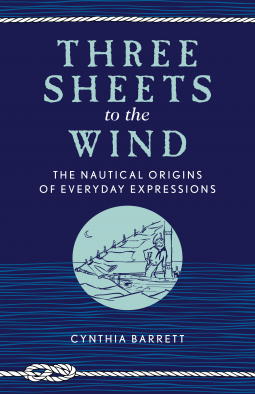
Three Sheets to the Wind
The Nautical Origins of Everyday Expressions
This title was previously available on NetGalley and is now archived.
Pub Date
May 1 2019
| Archive Date
May 10 2019
Description
The origins of a remarkable number of everyday words and phrases are anchored in our seafaring past. Three Sheets to the Wind: The Nautical Origins of Everyday Expressions is an entertaining compilation revealing the maritime roots of common English expressions. The original “slush fund” was the fatty scraps from boiled meat that the ship’s cook secretly stashed away to sell at port to candle makers. The man who originally “turned a blind eye” was Admiral Nelson. In one of Naval history’s most famous acts of insubordination, Nelson, in the heat of battle, raised his telescope to his blind eye and announced he could not see the signal flag commanding him to break off action. The perfect companion for etymology lovers, factophiles, ocean dreamers, and the conversationally curious, Three Sheets to the Wind features 200 words and expressions that are nautically inspired. Alphabetically organized (from A to Sea) readers can also enjoy 100 original illustrations as well as relevant excerpts from the great novels of Melville, Forester, O’Brian, and others. These passages illustrate how such literary giants reached for these expressions in their classic masterpieces. Our everyday speech is peppered with language used by sailors when someone says they are “pooped” because they stayed to the “bitter end” of “happy hour”.
The origins of a remarkable number of everyday words and phrases are anchored in our seafaring past. Three Sheets to the Wind: The Nautical Origins of Everyday Expressions is an entertaining...
Description
The origins of a remarkable number of everyday words and phrases are anchored in our seafaring past. Three Sheets to the Wind: The Nautical Origins of Everyday Expressions is an entertaining compilation revealing the maritime roots of common English expressions. The original “slush fund” was the fatty scraps from boiled meat that the ship’s cook secretly stashed away to sell at port to candle makers. The man who originally “turned a blind eye” was Admiral Nelson. In one of Naval history’s most famous acts of insubordination, Nelson, in the heat of battle, raised his telescope to his blind eye and announced he could not see the signal flag commanding him to break off action. The perfect companion for etymology lovers, factophiles, ocean dreamers, and the conversationally curious, Three Sheets to the Wind features 200 words and expressions that are nautically inspired. Alphabetically organized (from A to Sea) readers can also enjoy 100 original illustrations as well as relevant excerpts from the great novels of Melville, Forester, O’Brian, and others. These passages illustrate how such literary giants reached for these expressions in their classic masterpieces. Our everyday speech is peppered with language used by sailors when someone says they are “pooped” because they stayed to the “bitter end” of “happy hour”.
Available Editions
| EDITION |
Other Format |
| ISBN |
9781493042272 |
| PRICE |
$16.95 (USD)
|
Additional Information
Available Editions
| EDITION |
Other Format |
| ISBN |
9781493042272 |
| PRICE |
$16.95 (USD)
|
Average rating from 7 members
Featured Reviews
 Lisa N, Reviewer
5 stars
5 stars
5 stars
5 stars
5 stars
I thought this book was kind of a hoot! I'm amazed at how much of our everyday words come from these salty sailors! I use a lot of it constantly. I have arthritis, and when it gets bad I tend to grab onto my hip. I call it listing to the starboard side! I've always thought that if there is such a thing as past lives, then I must have been a sailor. My favorite thing from this book? Yeah, that would be a cup of Joe! I won't tell you here, but it was funny how this saying came about! My thanks to Cynthia Barrett, and Netgalley for allowing me to read, enjoy and review this.
5 stars
5 stars
5 stars
5 stars
5 stars
 Steph C, Reviewer
5 stars
5 stars
5 stars
5 stars
5 stars
I loved this little book! It is full of interesting words we use that I would have never guessed came from sailors and ships. There was a lot of humor and some scandalous association to common phrases. I highly recommend it.
5 stars
5 stars
5 stars
5 stars
5 stars
 Nancy A. B, Reviewer
4 stars
4 stars
4 stars
4 stars
4 stars
Three Sheets to the Wind: The Nautical Origins of Everyday Expressions by Cynthia Barrett was an entertaining read.
Cynthia Barrett comes from generations of seafaring men, her grandfather a whaler and her father a Navy man. In her attractive, illustrated volume she offers the entomology of phrases and terms that are rooted in maritime activities.
Presented in alphabetical order, each phrase includes an explanation of its origin and contemporary use, illustrated with excerpts from literature ranging from Homer to Melville to Patrick O'Brian.
I was a girl when I discovered Joan Lowell's pseudo-biography of a girl's life growing up on a sailing ship, Cradle of the Deep, and ever since I have enjoyed reading books about the age of sail, including the Nordoff and Hall Bounty books and Forester's Horatio Hornblower books. So, I was familiar with the original meanings of many of the terms, but others were a revelation.
When Archie Bunker called Edith a "dingbat" who knew a dingbat was slang for a deck mop made of used rope ends which would fly about uncontrollably while in use?
Speaking of old rope, the ends had to be repaired and spliced during times of calm, the sailors so employed being said to be "at loose ends."
I remember when blue jeans were called dungarees. Dungri is a Hindi word for cotton cloth. The first sailor's pants were made of old sails. Later, blue serge bell bottom pants were invented to make rolling up the pants legs easier for sailors employed at swapping the deck. When I was a teen bell bottom jeans were the rage.
A sailor from Belgium stowed his duds in a bag called a Duffle after the rough woolen cloth they used to make the sailor's clothing.
200 words and expressions are covered, and I am sure many will be surprised to learn the origin of sayings we still employ today.
I received a free ebook from the publisher in exchange for a fair and unbiased review.
4 stars
4 stars
4 stars
4 stars
4 stars
 Librarian 68637
4 stars
4 stars
4 stars
4 stars
4 stars
This book explains the origin of various nautical terms. Many terms included in the book I did not realize had a nautical origin. Each explanation is brief, but well written. Very interesting and enlightening.
4 stars
4 stars
4 stars
4 stars
4 stars
Featured Reviews
Lisa N, Reviewer
5 stars
5 stars
5 stars
5 stars
5 stars
I thought this book was kind of a hoot! I'm amazed at how much of our everyday words come from these salty sailors! I use a lot of it constantly. I have arthritis, and when it gets bad I tend to grab onto my hip. I call it listing to the starboard side! I've always thought that if there is such a thing as past lives, then I must have been a sailor. My favorite thing from this book? Yeah, that would be a cup of Joe! I won't tell you here, but it was funny how this saying came about! My thanks to Cynthia Barrett, and Netgalley for allowing me to read, enjoy and review this.
5 stars
5 stars
5 stars
5 stars
5 stars
Steph C, Reviewer
5 stars
5 stars
5 stars
5 stars
5 stars
I loved this little book! It is full of interesting words we use that I would have never guessed came from sailors and ships. There was a lot of humor and some scandalous association to common phrases. I highly recommend it.
5 stars
5 stars
5 stars
5 stars
5 stars
Nancy A. B, Reviewer
4 stars
4 stars
4 stars
4 stars
4 stars
Three Sheets to the Wind: The Nautical Origins of Everyday Expressions by Cynthia Barrett was an entertaining read.
Cynthia Barrett comes from generations of seafaring men, her grandfather a whaler and her father a Navy man. In her attractive, illustrated volume she offers the entomology of phrases and terms that are rooted in maritime activities.
Presented in alphabetical order, each phrase includes an explanation of its origin and contemporary use, illustrated with excerpts from literature ranging from Homer to Melville to Patrick O'Brian.
I was a girl when I discovered Joan Lowell's pseudo-biography of a girl's life growing up on a sailing ship, Cradle of the Deep, and ever since I have enjoyed reading books about the age of sail, including the Nordoff and Hall Bounty books and Forester's Horatio Hornblower books. So, I was familiar with the original meanings of many of the terms, but others were a revelation.
When Archie Bunker called Edith a "dingbat" who knew a dingbat was slang for a deck mop made of used rope ends which would fly about uncontrollably while in use?
Speaking of old rope, the ends had to be repaired and spliced during times of calm, the sailors so employed being said to be "at loose ends."
I remember when blue jeans were called dungarees. Dungri is a Hindi word for cotton cloth. The first sailor's pants were made of old sails. Later, blue serge bell bottom pants were invented to make rolling up the pants legs easier for sailors employed at swapping the deck. When I was a teen bell bottom jeans were the rage.
A sailor from Belgium stowed his duds in a bag called a Duffle after the rough woolen cloth they used to make the sailor's clothing.
200 words and expressions are covered, and I am sure many will be surprised to learn the origin of sayings we still employ today.
I received a free ebook from the publisher in exchange for a fair and unbiased review.
4 stars
4 stars
4 stars
4 stars
4 stars
Librarian 68637
4 stars
4 stars
4 stars
4 stars
4 stars
This book explains the origin of various nautical terms. Many terms included in the book I did not realize had a nautical origin. Each explanation is brief, but well written. Very interesting and enlightening.
4 stars
4 stars
4 stars
4 stars
4 stars
Readers who liked this book also liked:
The Original
Priya Parmar
Historical Fiction, Women's Fiction
All We Say
Ben Rhodes
History, Nonfiction (Adult), Politics & Current Affairs
A Quilt of Stars
Karen Nyberg; Ann McCallum Staats
Biographies & Memoirs, Children's Nonfiction
Sunrise
Téa Obreht
General Fiction (Adult)
Nightjar
Emily Ruskovich
General Fiction (Adult)
True North
Paul Theroux
Biographies & Memoirs, Nonfiction (Adult), Travel